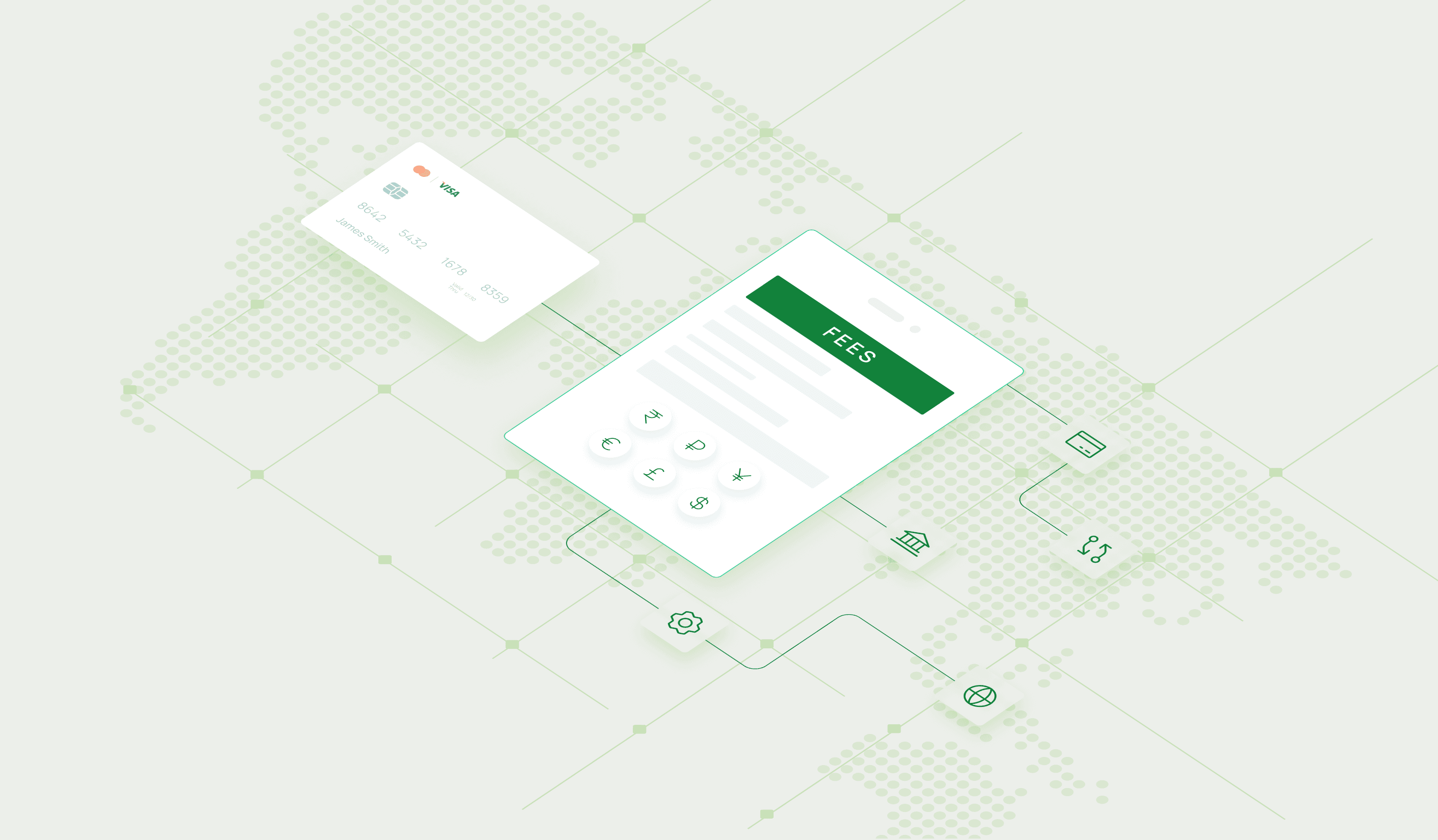
Managing payments is critical for any business, yet the associated costs often hide in plain sight, quietly eating into profits. Merchant Account Payment Costs (MAPCs) —spanning card payments, cross-border transactions, and chargebacks— can accumulate rapidly, especially for businesses processing high transaction volumes.
For large-scale businesses processing high transaction volumes, these hidden costs can balloon into significant expenses, impacting profitability and operational efficiency. Understanding and optimizing MAPCs is essential to stay competitive and protect your margins.
What are MAPCs?
Merchant Account Payment Costs (MAPCs) represent the fees merchants pay to facilitate electronic transactions. These fees cover the infrastructure and services needed to securely authorize and settle payments, forming the backbone of modern commerce.
While essential for enabling payment acceptance, MAPCs can become a significant burden for high-volume businesses. They include payments to card networks, issuing banks, processors, and other intermediaries within the payments ecosystem. Understanding and managing these costs is critical for optimizing margins and maintaining competitiveness.
Components of MAPCs
Interchange fees
Interchange fees are paid to card-issuing banks. They are often the largest component of MAPCs and are typically structured as a percentage of the transaction amount plus a fixed fee. For example, an interchange fee might be 1.5% + $0.10 per transaction.
These fees vary based on factors such as:
- Card type (credit, debit, or premium cards).
- Transaction method (online, in-person, or keyed-in).
- Industry or merchant category code (MCC).
Assessment fees
Assessment fees are charged by the card networks (e.g., Visa, Mastercard) for using their infrastructure. These fees are generally a small percentage of the transaction amount, such as 0.13% for Visa or 0.14% for Mastercard.
Payment processor fees
Payment processors or gateways charge merchants for handling transactions. These fees may include:
- Per-transaction fees (e.g., $0.20 per transaction).
- Monthly account fees.
- Fees for additional services like recurring billing or fraud prevention.
Chargeback fees
When a customer disputes a transaction and it is reversed, merchants face chargeback fees. These can range from $15 to $100 per chargeback, depending on the processor. Excessive chargebacks can also lead to higher MAPCs due to penalties or reclassification as a high-risk merchant.
Cross-border and currency conversion fees
For international transactions, merchants may incur additional costs:
- Cross-border fees: Charged when the transaction involves different countries.
- Currency conversion fees: Applied when payments are made in a currency other than the merchant’s base currency.
ICC+ Pricing
Interchange ++ (ICC+) pricing is a transparent pricing model widely used in payment processing. In this model, merchants pay:
- Interchange fees: Set by the card networks and paid to the issuing bank.
- Card scheme fees: Assessment fees charged by the card networks.
- Processor markup: A fixed fee or percentage added by the payment processor.
ICC+ pricing is favored for its transparency, as it breaks down all costs, helping merchants understand exactly what they’re paying for.
Why MAPCs are key for healthy profit margins
MAPCs often make up a significant portion of operating expenses, particularly for businesses in high-volume industries like retail, food service, or e-commerce. Even small inefficiencies in payment costs can have an outsized impact on profitability.
Optimizing MAPCs requires a thorough understanding of their components, uncovering hidden fees, and implementing strategies to reduce costs without compromising payment infrastructure. By managing MAPCs effectively, businesses can protect their margins and position themselves for sustainable growth.
5 Strategies to Optimize MAPCs
Reducing MAPCs is achievable with the right approach. Here are five actionable strategies to help merchants minimize costs and improve payment efficiency.
1. Negotiate Transparent Pricing Models
Adopt “interchange-plus” or ICC+ pricing models, which clearly itemize the processor’s markup. This eliminates hidden fees common in flat-rate pricing and provides greater transparency and control over payment costs.
2. Optimize Card Acceptance Policies
Encourage the use of debit cards, which typically carry lower interchange fees compared to credit or premium cards. Review your card acceptance policies to prioritize cost-efficient methods that align with your business model.
3. Monitor and Reduce Chargebacks
Use fraud prevention tools and establish clear refund policies to minimize chargebacks. Address disputes proactively to avoid high fees and protect your merchant classification from being labeled as high-risk.
4. Leverage Payment Orchestration Platforms
A payment orchestration platform can intelligently route transactions based on cost, location, and success rates. This reduces cross-border fees, increases transaction approval rates, and ensures cost efficiency across all payment methods.
5. Audit Payment Statements Regularly
Conduct routine audits of processor statements to identify hidden fees or discrepancies. Regular reviews help you negotiate better terms and ensure you’re not overpaying for services.
How payment orchestration reduces MAPCs
Advanced payment technologies, like payment orchestration platforms, help merchants cut Merchant Account Payment Costs (MAPCs) by streamlining operations and automating cost-saving decisions.
Payment orchestration platforms centralize transaction management, making it easier to optimize authorization rates, route payments efficiently, and minimize fees. By directing payments based on cost and success likelihood, these platforms reduce cross-border fees and improve transaction outcomes. They also integrate with ICC+ pricing models, providing real-time cost insights to give merchants better control over their expenses.
MAPCs are unavoidable, but they don’t have to strain your business. By using technology to uncover inefficiencies and reduce fees, merchants can protect profits and stay competitive. Book a demo with Yuno today to discover how their payment orchestration platform can help your business boost profitability.