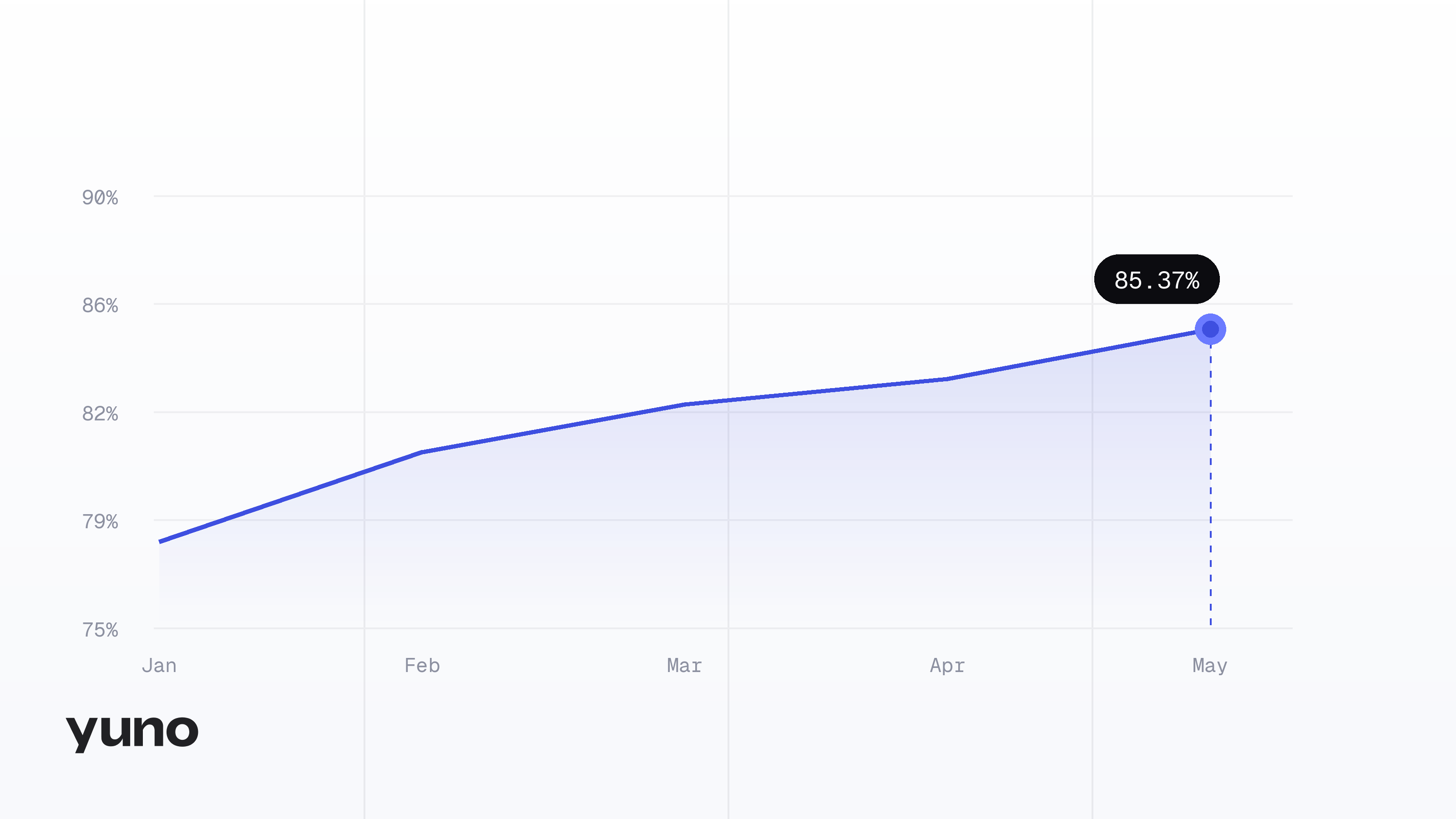
Enterprise subscription businesses lose between 9% and 20% of annual revenue to payment failures (industry composite, 2025). Most of that leakage is not from customers canceling. It comes from cards that expired last month, issuers in Germany applying different fraud rules than issuers in the UK, and retry logic that was designed for one market running unchanged across twelve.
Multi-currency subscription billing compounds every payment failure problem that exists in a single-market business. The same charge, in the same billing cycle, can succeed easily in one country and fail repeatedly in another, for reasons that have nothing to do with the subscriber's intent to pay.
Key Takeaways
- Retry timing and dunning cadence must be configured per market. A single global sequence consistently underperforms against market-specific logic.
- Network tokens that auto-update card credentials remove the leading cause of soft declines on recurring charges, without any action from the subscriber.
- Local payment methods such as SEPA Direct Debit in Europe and UPI in India reduce card dependency and the issuer friction that comes with it.
- Presentment currency and settlement currency are distinct. Conflating them breaks reconciliation across multi-currency billing stacks.
- Yuno's platform data shows an 8% average authorization rate uplift from smart routing, and up to 75% of failed transactions recovered via NOVA's AI recovery layer (Yuno platform data, 2026).
Why Multi-Currency Subscription Billing Fails at Scale
Multi-currency subscription billing fails at scale because issuer behavior, card mix, and regulatory context vary by market, and most billing stacks apply one global configuration to all of them. The result is a retry queue that works reasonably well in the merchant's home market and quietly bleeds revenue everywhere else.
We've seen this pattern repeatedly across enterprise SaaS and digital media merchants operating in five or more markets. The failure modes cluster into three categories.
- Soft declines that are recoverable in one market behave differently in another. An issuer in the Netherlands applies different fraud scoring to a recurring charge than an issuer in Japan. The same card, the same amount, the same billing day, two different outcomes. A retry fired at 24 hours may be optimal for the US issuer and counterproductive for the Dutch one, which interprets rapid retries as a fraud signal.
- Stale card credentials accumulate faster than most billing teams expect. Cards get reissued after fraud events, replaced when they expire, and re-keyed when a subscriber gets a new device. Without automatic credential refresh, those recurring charges hit a dead end. The subscriber never intended to cancel, and the merchant never gets the chance to retry against live credentials.
- Currency presentation errors erode conversion at the moment a subscriber first checks out, and silently distort reconciliation on every subsequent renewal. Presentment currency is what the subscriber sees. Settlement currency is what arrives in the merchant's account. FX happens somewhere between those two numbers. If the billing stack does not track that gap per-transaction, reconciliation becomes a quarterly fire drill.
First, soft declines that are recoverable in one market behave differently in another. An issuer in the Netherlands applies different fraud scoring to a recurring charge than an issuer in Japan. The same card, the same amount, the same billing day, two different outcomes. A retry fired at 24 hours may be optimal for the US issuer and counterproductive for the Dutch one, which interprets rapid retries as a fraud signal.
Second, stale card credentials accumulate faster than most billing teams expect. Cards get reissued after fraud events, replaced when they expire, and re-keyed when a subscriber gets a new device. Without automatic credential refresh, those recurring charges hit a dead end. The subscriber never intended to cancel, and the merchant never gets the chance to retry against live credentials.
Third, currency presentation errors erode conversion at the moment a subscriber first checks out, and silently distort reconciliation on every subsequent renewal. Presentment currency is what the subscriber sees. Settlement currency is what arrives in the merchant's account. FX happens somewhere between those two numbers. If the billing stack does not track that gap per-transaction, reconciliation becomes a quarterly fire drill.
How Retry Logic Should Work Across Markets
Effective retry logic for multi-currency subscription billing reads the decline code first, routes to the right acquirer second, and times the retry based on market-specific issuer behavior. Generic retry schedules, fired at fixed intervals regardless of decline type, recover a fraction of what targeted logic can reach.
Decline codes carry signal. A soft decline for insufficient funds in a market with weekly pay cycles has a different optimal retry window than a soft decline triggered by a fraud rule. Hard declines should not be retried at all. Without decline-code classification at the infrastructure level, the retry queue wastes attempts on unrecoverable failures and misses the timing window on recoverable ones.
Acquirer routing compounds the effect. A charge routed through a domestic acquirer in the subscriber's home market consistently outperforms the same charge routed cross-border, because local transactions face less issuer friction and avoid cross-border decline codes entirely. For subscription merchants running at high volume in markets like the UK, Germany, or Australia, local acquiring is the fastest route to higher renewal approval rates.
In our integrations across enterprise subscription verticals, the combination of decline-code-aware retry logic and multi-PSP routing recovers materially more revenue than any single-acquirer retry setup. The infrastructure detail that makes it work is having more than one acquirer available per market, so that when the first attempt fails on one route, the next attempt goes out on a different one before the subscriber notices anything. You can read more about why this architecture outperforms single-acquirer setups in our coverage of multi-PSP recovery versus single-acquirer retry logic for subscription merchants.
Why Dunning Strategy Must Be Market-Specific
Dunning, the sequence of communication and retry attempts that follows a failed payment, must be calibrated to the subscriber's market, not standardized globally. A sequence optimized for a UK subscriber base will underperform in markets with different banking rhythms, bank holiday schedules, and communication channel preferences.
Consider timing. A subscriber in Germany may be paid on the last working day of the month. A retry fired on the third of the month may land before funds clear. The same retry logic applied to a subscriber in India, where weekly or biweekly salary cycles are common in some demographics, hits a different window entirely. Bank holiday calendars vary across Europe alone; a retry on a public holiday in France or Spain often returns a bank-side decline that has nothing to do with the subscriber's ability to pay.
Communication channel matters too. Email dunning, the default in most billing stacks, reaches different proportions of subscribers depending on market. In markets where WhatsApp penetration is high, an AI-assisted recovery message via a conversational channel reaches the subscriber in the context they actually monitor. NOVA, Yuno's AI payment recovery layer, contacts customers across channels including WhatsApp and voice in over 70 languages, recovering up to 75% of failed transactions with zero engineering overhead from the merchant (Yuno product data, 2026).
The practical implication is that dunning configuration should be a first-class variable in the subscription billing stack, not a fixed global default. Merchants running on a single billing sequence across all markets are, in most cases, leaving recoverable revenue uncollected every month.
How Local Payment Methods Reduce Card Dependency in Subscription Billing
Local payment methods reduce the card dependency that drives most involuntary churn in cross-border subscription billing. In markets where card penetration is lower or where issuers apply stricter recurring-transaction rules, offering a local method converts subscribers who would never have activated on a card flow.
In Europe, SEPA Direct Debit removes card rails from the equation entirely for Euro-denominated subscriptions. Once authorized, a SEPA mandate gives the merchant pull-payment rights directly from the subscriber's bank account. Decline rates on SEPA mandates are structurally lower than on card-on-file transactions, because the failure mode shifts from issuer behavior to account balance. iDEAL in the Netherlands and Bancontact in Belgium serve similar functions at the national level, acting as high-trust entry points that convert into recurring relationships.
In APAC, the picture is more fragmented but the principle holds. UPI in India handles a subscriber base with low credit card penetration at high transaction volumes. GrabPay and LINE Pay serve comparable roles in Southeast Asia and Japan respectively. For a subscription merchant expanding into these markets, building the card flow first and treating local methods as secondary is a reliable way to underperform on acquisition and churn simultaneously.
The infrastructure challenge is that each local method has its own authorization model, retry behavior, and reconciliation format. Integrating them individually across markets is an engineering cost that compounds with each new country. The more scalable approach is a single orchestration layer that activates local methods per market by configuration, without a new integration for each one. Our post on how to choose the right local payment methods in new markets covers the selection framework in more detail.
The Currency Architecture That Keeps Reconciliation Clean
Clean multi-currency reconciliation requires tracking presentment currency, settlement currency, and the FX rate applied at the transaction level, not at the monthly statement level. Merchants who aggregate FX costs at reporting time lose the granularity needed to detect systematic overcharging or routing inefficiencies.
Every subscription renewal in a foreign currency creates a chain: the subscriber sees a price in local currency, the card network applies a conversion rate, the acquirer settles in a different currency, and the merchant's bank receives funds in the home currency. Four numbers, four potential discrepancy points. When a billing stack does not record all four per transaction, the reconciliation team works backward from bank statements, which is slow and error-prone.
Stablecoins are worth considering for specific high-value, cross-border billing flows where FX costs and settlement timing are the primary operational friction. On traditional rails, a subscription renewal from a corporate subscriber in Singapore settling into a US dollar account may take two to three business days and carry a non-trivial conversion spread. A stablecoin rail settles in minutes, 24 hours a day, at a lower transaction cost. Yuno supports stablecoin orchestration as an additional rail alongside traditional card and bank methods, deployed where it performs best.
The operational principle across all of this is that currency management in subscription billing is not a reporting problem. It is an infrastructure decision. Merchants who treat it as reporting discover the cost after the fact. Merchants who treat it as infrastructure configure the rules upfront and let the platform enforce them on every renewal.
Keeping Card Credentials Live Across Renewal Cycles
Network tokens replace static card numbers with issuer-managed credentials that update automatically when a card is reissued, replaced, or refreshed after a fraud event. For subscription merchants, this eliminates the leading cause of soft declines on recurring charges: credentials that were valid at signup and stale at renewal.
The mechanics matter here. A static card number stored at signup is a snapshot. When the underlying card changes, that snapshot becomes invalid. The subscriber does not cancel; the card just stops working. The billing stack retries against dead credentials, exhausts the dunning sequence, and marks the subscriber as churned. The subscriber, meanwhile, has a working card and no idea why their subscription lapsed.
Network tokens issued by Visa and Mastercard are dynamic. They update behind the scenes when the card issuer reissues the underlying card. The subscription billing stack retries against live credentials without any action from the subscriber. For merchants running large card-on-file subscriber bases across multiple markets, the authorization rate improvement from token-based credentials compounds across every billing cycle.
Yuno's vault makes tokens portable across acquirers. If a merchant switches or adds a PSP in a given market, the tokens migrate. There is no re-tokenization event, no subscriber outreach to update payment details, and no authorization gap during the transition. That portability is the detail that matters most for subscription merchants expanding into new markets or managing multi-PSP setups across regions.
What a Production-Ready Multi-Currency Subscription Stack Looks Like
A production-ready multi-currency subscription billing stack combines market-specific retry logic, local payment method coverage, live card credentials, and per-transaction currency tracking into a single configuration layer. The merchants who build this well do not rebuild it every time they enter a new market.
Based on our infrastructure supporting enterprise subscription merchants across multiple continents, the configuration decisions that have the largest revenue impact are these:
- Decline-code classification at the routing layer, so retries are only fired on recoverable failure types.
- Multi-acquirer availability per market, so a failed attempt on one route has an alternative route available in the same billing cycle.
- Network token enrollment at the point of initial authorization, so all future renewals use updatable credentials from day one.
- Local payment method activation per market by configuration, without a new integration for each method.
- Per-transaction FX tracking that records presentment rate, settlement rate, and the acquirer applying the conversion.
- Market-specific dunning sequences with configurable timing, channel, and escalation logic.
- AI-assisted recovery as a fallback layer for failed charges that have exhausted the automated retry sequence.
Merchants running this configuration through Yuno see an average 8% authorization rate uplift from smart routing alone (Yuno platform data, 2026). Recovery via NOVA adds a second layer on top of that, contacting subscribers through their preferred channel before the billing window closes. For a subscription business operating across five or more markets, those two layers together close most of the gap between current recovery rates and what the subscriber base would actually pay if reached correctly.
The Yuno Subscriptions product handles billing cycle configuration, retry automation, dunning sequences, and reconciliation in a single dashboard, with all of Yuno's routing and recovery infrastructure available without a separate integration. Merchants configure the rules once and the platform applies them across every market in the stack.
Practical Starting Point for Payment Leaders
The most common gap we find when auditing a multi-currency subscription billing setup is not missing technology. It is technology configured globally that should be configured locally. The retry schedule is the same in every market. The dunning sequence fires in one language. The acquirer routing sends every renewal through the same provider regardless of where the subscriber's bank is located.
Start with three audits. First, pull decline codes by market for the last 90 days. Identify which codes appear in large volume and whether current retry logic is firing on hard declines as well as soft ones. Second, check token enrollment rates at the point of initial authorization. If a meaningful share of new subscribers are being stored as static credentials, that cohort will generate elevated soft declines at the 12-month renewal mark. Third, review local payment method coverage against your top five markets by subscriber count. If any of those markets rely exclusively on card rails, quantify the subscriber share that might be reachable via a local bank or wallet method instead.
- Pull decline codes by market for the last 90 days. Identify which codes appear in large volume and whether current retry logic is firing on hard declines as well as soft ones.
- Check token enrollment rates at the point of initial authorization. If a meaningful share of new subscribers are being stored as static credentials, that cohort will generate elevated soft declines at the 12-month renewal mark.
- Review local payment method coverage against your top five markets by subscriber count. If any of those markets rely exclusively on card rails, quantify the subscriber share that might be reachable via a local bank or wallet method instead.
Those three audits surface the revenue gaps that are already present in the current stack. The infrastructure to close them, smarter routing, better credentials, wider payment method coverage, is a configuration problem once the orchestration layer is in place. For merchants still evaluating the infrastructure decisions behind multi-market expansion, our post on payment platform infrastructure decisions for multi-country expansion covers the build-versus-configure question in detail.