Mastercard's Global Merchant Audit Program (GMAP) takes effect April 1, 2027, replacing every existing fraud and dispute monitoring program in one move (Mastercard, 2026). The merchants who feel it first will not be the ones with high chargebacks. They will be the ones who cannot automate payment reconciliation fast enough to show their acquirer clean, unified data before enforcement begins.
Key Takeaways
- GMAP launches April 1, 2027 and replaces Mastercard's existing fraud and dispute monitoring programs with a single unified framework covering four new merchant categories.
- GMAP captures fraud that never resulted in a chargeback, so merchants relying only on chargeback ratios are flying blind on at least half their exposure.
- Acquirers face direct consequences under GMAP for merchant portfolio breaches, which means your acquirer will act faster than you expect once thresholds are breached.
- Merchants managing multiple PSPs through separate dashboards cannot produce a consolidated fraud ratio view without automated reconciliation infrastructure.
- Yuno's Reconciliation Automation and Payment Concierge give finance and payments teams a unified view across all providers, with real-time anomaly alerts that surface ratio risk before an acquirer does.
What Is Mastercard GMAP and Why Does It Change the Risk Calculus?
GMAP is Mastercard's replacement for its legacy fraud and dispute monitoring programs, consolidating all thresholds into a single framework with four new merchant classifications: High Dispute Merchant (HDM), Excessive Dispute Merchant (EDM), High Fraud Activity (HDA), and Excessive Fraud Activity (EDA). The program also introduces acquirer-level monitoring, meaning your processor now has direct financial exposure to your fraud and dispute ratios.
The structural shift that matters most is this: GMAP monitors fraud that never escalated to a chargeback. Legacy programs were largely backward-looking, measuring disputes after the fact. GMAP looks at total fraud signals, including declined and unreported fraud, giving Mastercard a broader and earlier view of merchant risk than the old Excessive Chargeback Merchant Program ever had.
Mastercard has aligned GMAP closely with Visa's Acquirer Monitoring Program (VAMP), which has been live since 2024. The card networks are converging on a portfolio-level standard. Enterprise merchants need one coherent fraud and reconciliation infrastructure, not separate responses to separate programs.
Why Fragmented PSP Dashboards Create a Hidden Compliance Risk
Most enterprise merchants run two or more payment providers, each producing its own settlement files, fraud reports, and dispute data in different formats and cadences. No single dashboard shows total fraud exposure across all providers simultaneously, which is exactly the view GMAP will use to assess compliance.
We have seen this gap surface repeatedly across our integrations with high-volume merchants in retail, travel, and digital goods. A merchant's chargeback ratio looks acceptable inside one provider's portal. But when fraud signals from a second and third provider are aggregated, the combined ratio crosses a monitoring threshold. The merchant had no visibility to that combined number until an acquirer notice arrived.
This is not a theoretical risk. GMAP's introduction of acquirer-level consequences accelerates the timeline. Acquirers will begin flagging merchants earlier because they now have direct liability. A merchant that cannot produce a clean, consolidated fraud and settlement reconciliation report on demand is a risk management problem for its acquirer, not just for itself.
The reconciliation gap is also a revenue gap. Industry analysis estimates that one in five eCommerce orders fail globally, creating approximately $47 billion in annual revenue leakage (Optimus, 2026). Fragmented data means merchants often cannot identify which failures are recoverable and which reflect genuine fraud, blurring the line between optimization and compliance.
The GMAP Audit Framework: Four Checks to Run Before April 2027
A GMAP readiness audit has a clear sequence: measure your current combined fraud ratio across all providers, then close the data and tooling gaps that prevent you from seeing that number in real time. CFOs and heads of payments who run this audit before Q4 2026 will have time to act. Those who wait until Q1 2027 will be racing an enforcement deadline.
Run these four checks against your current stack.
Check One: Can You Produce a Consolidated Fraud Ratio Today?
Pull your fraud-to-sales ratio across all active payment providers for the last 90 days. If this requires manual export and spreadsheet merging, you cannot produce it on demand. GMAP compliance requires continuous visibility, not a monthly reconciliation exercise.
If your answer is "not without three hours of analyst work," that is the first infrastructure gap to close. Automated reconciliation pulls provider data into a single view without manual intervention. Anomaly alerts fire when ratios move, not after a monthly close cycle.
Check Two: Are You Capturing Pre-Chargeback Fraud Signals?
GMAP monitors fraud that never became a chargeback. Ask your payments team whether your current reporting stack captures issuer-reported fraud, including TC40 and SAFE data, across all providers. Many merchants only track disputes that reach dispute resolution, leaving early fraud signals unmonitored.
Yuno's Risk Conditions layer applies rule-based fraud logic across all transactions at the infrastructure level, giving teams a consolidated signal feed rather than per-provider fragments.
Check Three: Is Your Acquirer Receiving Clean Settlement Data?
Under GMAP, acquirers are directly incentivized to identify at-risk merchants early. An acquirer that cannot reconcile your transaction data clearly will flag you as an operational risk before any threshold is breached. Your reconciliation quality is now a relationship management issue, not only an internal accounting process.
Yuno's Reconciliation Automation centralizes the entire flow from transaction processing through settlement, comparing provider data, Yuno transaction records, and fee agreements automatically. Discrepancies surface as alerts, not as end-of-month surprises. The product page for Reconciliation Automation covers the full settlement-to-bank matching architecture. Finance teams using this approach remove the manual export cycle entirely, which is the step that creates the most latency in fraud ratio reporting.
Check Four: How Long Does It Take Your Team to Respond to a Ratio Spike?
Under legacy programs, a merchant might discover a chargeback ratio problem at month-end. Under GMAP, acquirers will have real-time visibility to portfolio-level signals. If your response time is measured in days, you are operating on a slower cycle than your acquirer will be.
From our platform data, automated monitoring with real-time rerouting collapses incident response from a multi-day manual process to a near-instant automated one. A large on-demand delivery marketplace in our network reduced disruption resolution time from minutes to milliseconds after implementing automated provider monitoring. That speed matters for GMAP because every transaction processed after a threshold is breached adds to the ratio.
How to Automate Payment Reconciliation Across Multiple PSPs
To automate payment reconciliation in a multi-PSP environment, you need a single layer that ingests settlement files from all providers in a normalized format, matches them against your transaction records, and flags discrepancies without human intervention. This is not a reporting project; it is an infrastructure project.
The three capabilities that matter for GMAP readiness are consolidation, anomaly detection, and settlement forecasting. Consolidation gives you the combined fraud ratio view GMAP will measure. Anomaly detection surfaces ratio spikes before your acquirer sees them. Settlement forecasting gives your finance team predictable cash flow data, which removes the manual reconciliation cycle that slows fraud reporting.
Yuno's Payment Concierge adds an AI layer on top of this infrastructure. Payment operations teams can ask natural language questions across all provider data from Slack or WhatsApp, including comparative PSP performance, rejection analysis, and approval rate trends. The Concierge generates reports in Excel or PDF on demand, which CFOs can share with acquirers directly, reducing the analyst hours required to produce compliance documentation from hours to seconds. You can see the full capability set on the Payment Concierge product page.
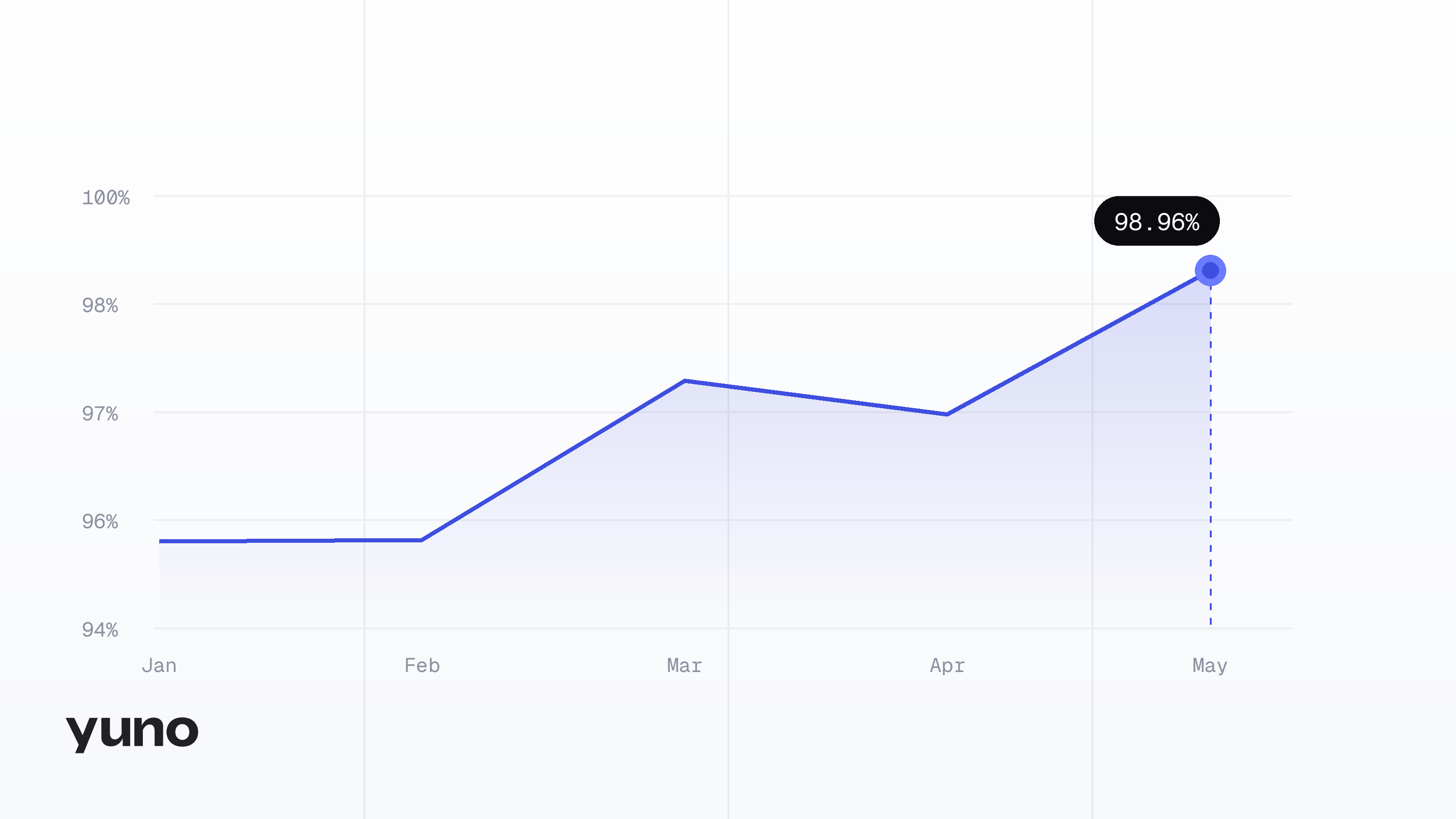
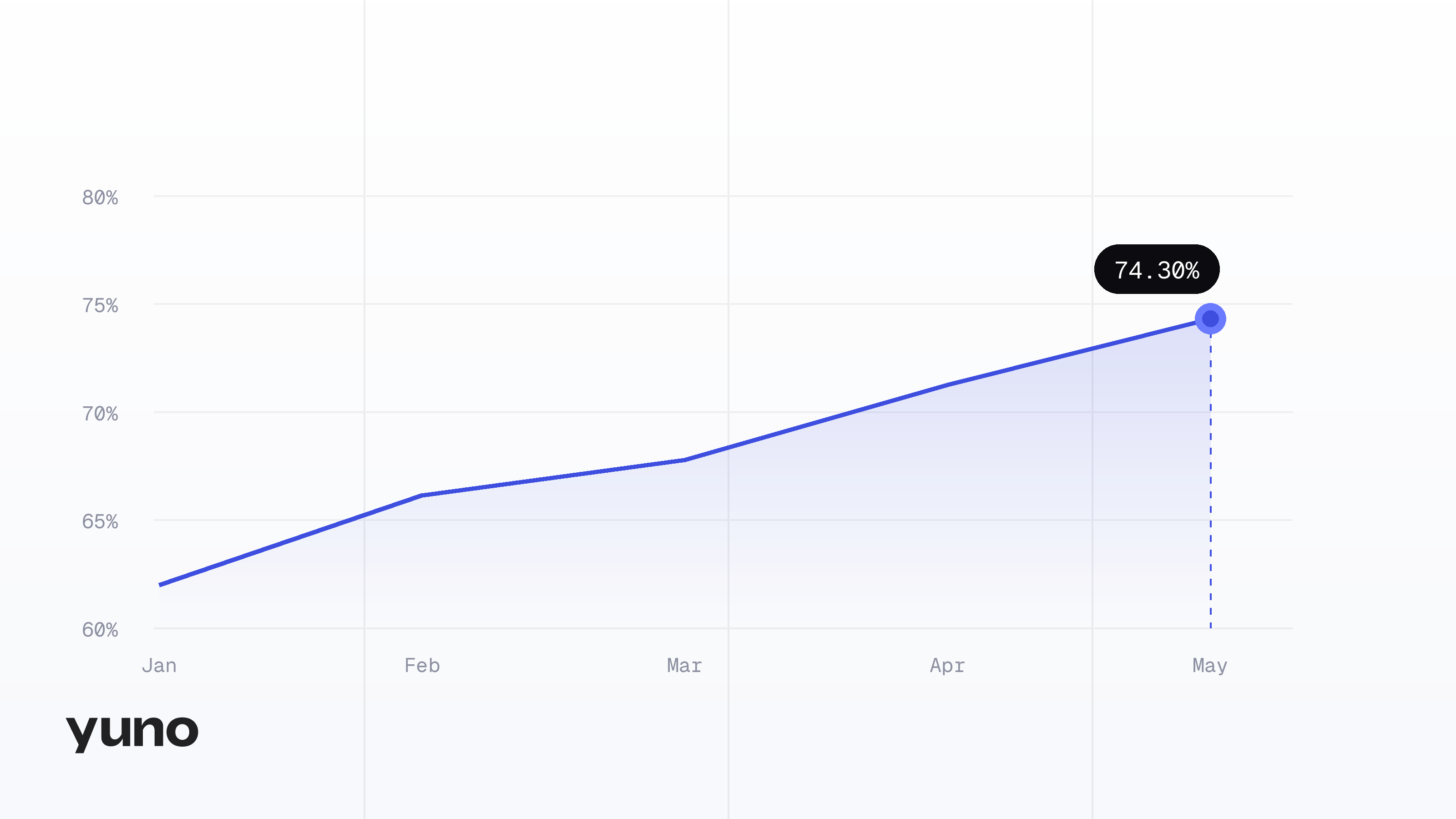
Yuno's platform data shows an 8% average authorization rate uplift for enterprise merchants using smart routing, and up to 75% of failed transactions recovered via NOVA (Yuno platform data, 2026). These are not separate wins from compliance. Higher approval rates reduce the transaction volume that becomes dispute fodder, directly improving the ratios GMAP tracks.
- 8% average authorization rate uplift for enterprise merchants using smart routing
- Up to 75% of failed transactions recovered via NOVA
What the GMAP Timeline Means for Infrastructure Investment Decisions
April 1, 2027 is the enforcement date, but the data that GMAP will audit begins accumulating from the moment the program takes effect. Merchants who build their consolidated fraud and reconciliation infrastructure after the launch date will be assessed on ratios they had no visibility to.
The practical implication: the infrastructure decision needs to happen in Q3 or Q4 2026. Merchants already running on a unified financial infrastructure layer can activate reconciliation automation quickly. Merchants starting from a fully fragmented stack, with separate API integrations per provider and no shared data layer, should allow two to three months for full consolidation before the April deadline.
Based on our work with enterprise merchants across retail, travel, and digital goods, the biggest delay in these projects is not the technical integration. It is getting clean historical transaction data out of legacy provider exports and into a normalized format. Starting that data extraction process now, before a GMAP notice forces it, is the highest-leverage action a CFO or head of payments can take in the next 60 days.
Mastercard's convergence with Visa's VAMP architecture signals a durable direction for card network oversight (Mastercard, 2026). GMAP is not a one-time rule change. It is the new baseline. Merchants who invest in automated reconciliation infrastructure now build a capability that compounds across every future card network update, not just April 2027.
The Practical Takeaway for CFOs and Heads of Payments
GMAP's April 2027 deadline creates a specific, bounded window to close the data gaps that card network oversight will expose. The merchants most at risk are not necessarily the ones with the worst fraud. They are the ones with the least visibility to their own combined ratios across providers.
Three actions are worth prioritizing immediately. First, pull a consolidated fraud-to-sales ratio across all active providers for the last 90 days. If this requires manual work, that process needs to be automated before the end of 2026. Second, confirm your fraud reporting captures pre-chargeback signals, not only disputes that reach resolution. Third, assess whether your current reconciliation cycle gives your acquirer clean, timely settlement data. If any of those three checks reveal a gap, the infrastructure to close it exists today.
- Pull a consolidated fraud-to-sales ratio across all active providers for the last 90 days. If this requires manual work, that process needs to be automated before the end of 2026.
- Confirm your fraud reporting captures pre-chargeback signals, not only disputes that reach resolution.
- Assess whether your current reconciliation cycle gives your acquirer clean, timely settlement data. If any of those three checks reveal a gap, the infrastructure to close it exists today.
Merchants who automate payment reconciliation before Q1 2027 enter the GMAP regime with a defensible data posture. Those who wait enter it hoping their ratios stay low enough that the gaps never get tested.