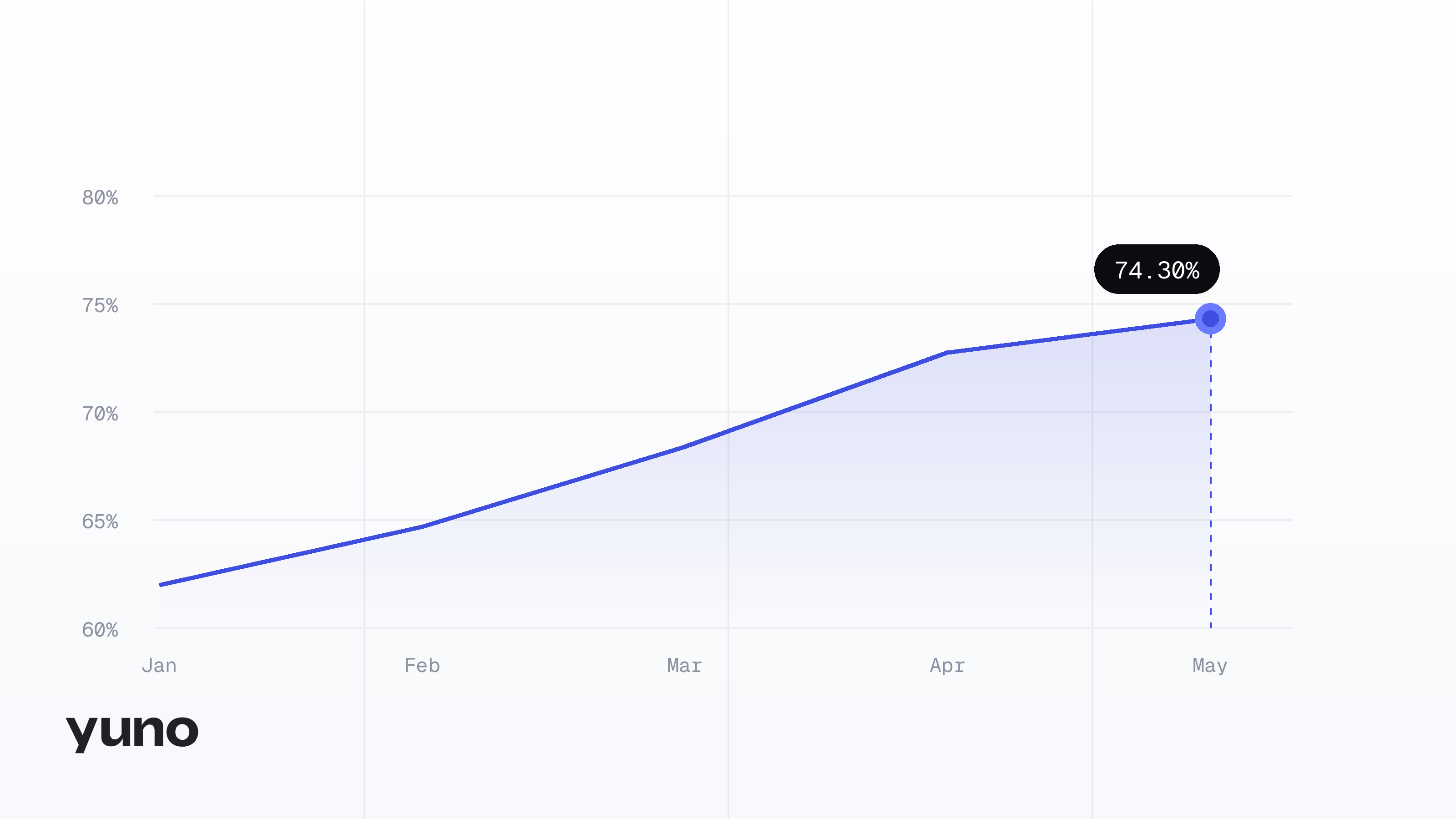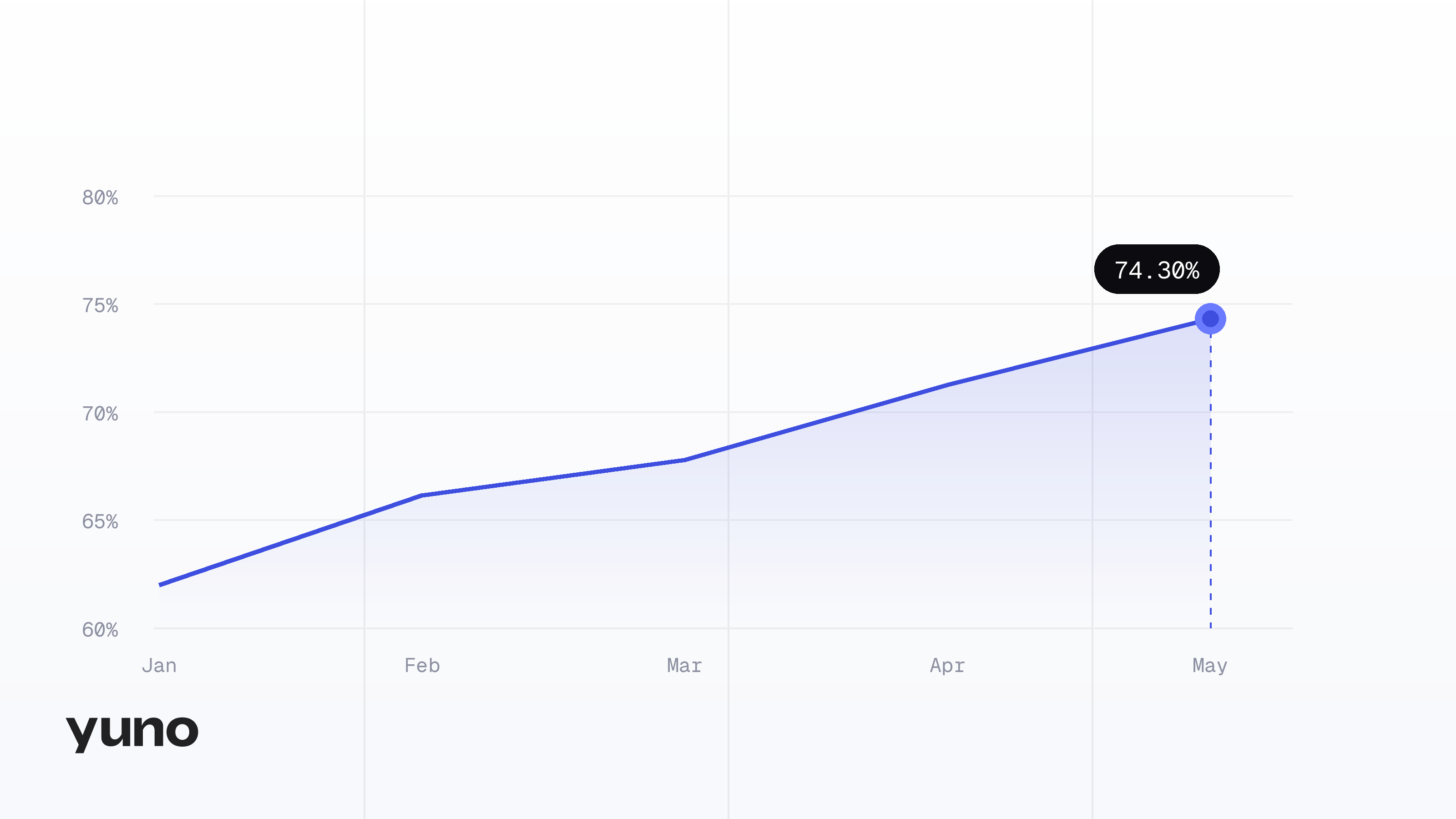
Involuntary churn is eating between 9% and 20% of annual recurring revenue across enterprise SaaS businesses (industry composite, 2025). Most heads of payments respond by upgrading their dunning tool, tightening retry schedules, and adding pre-dunning emails. The recovery numbers still disappoint. The reason is structural: the declines driving most involuntary churn are not happening at the card-on-file layer where dunning operates. They are happening at the PSP layer, where dunning cannot reach.
Payment retry logic is not the problem. PSP selection is. And until SaaS payment leaders audit the right layer, they will keep investing in the wrong fix.
Key Takeaways
- Dunning tools operate after a decline. If the decline originates at the PSP level, no retry sequence recovers it without fixing the upstream routing problem first.
- Decline codes are the diagnostic signal most SaaS billing stacks ignore. Hard declines should never enter a retry queue. Soft declines require different retry cadences by code type.
- Single-PSP setups mask the failure taxonomy. Multi-PSP infrastructure exposes whether the decline is a card problem, a processor problem, or an issuer relationship problem.
- Yuno's platform data shows an average 8% authorization rate uplift when merchants move from single-PSP to smart multi-PSP routing, before any dunning changes are made (Yuno platform data, 2026).
- AI-driven recovery outperforms static retry logic for card-not-present failures, recovering up to 75% of failed transactions that cannot be resolved automatically (Yuno product data, 2026).
Why Dunning Tools Fail at the Worst Moment
Dunning is a communication strategy, not a payment recovery strategy. It sends emails, triggers in-app alerts, and schedules retries after a charge has already failed.
The failure taxonomy matters here. When a subscription charge fails, it fails for one of three structurally different reasons. First, the card itself is the problem: expired, lost, or the customer genuinely has insufficient funds. Second, the PSP is the problem: a routing misconfiguration, a processor timeout, a weak authorization rate with a specific card issuer. Third, the issuer is the problem: a risk model that flags the merchant category, a cross-border friction pattern, or a blanket block on recurring charges from a particular acquirer.
Dunning logic is designed for the first category. It asks the customer to update their card, retries on a schedule, and eventually cancels the subscription. For the second and third categories, no amount of dunning helps. The card is valid. The customer wants to pay. The infrastructure is failing them.
We have seen this pattern consistently across enterprise SaaS integrations. A merchant runs a sophisticated dunning sequence with three retry attempts and a pre-dunning email campaign, and still loses 60% of soft-declined subscriptions. When we examine the decline codes, a significant share carry processor-specific rejection codes rather than card-level failures. The dunning tool never had a chance.
What Decline Codes Actually Tell You About Your PSP
Decline codes are the most underused diagnostic signal in subscription billing. Most SaaS billing dashboards surface a single "failed payment" number, which makes a processor routing failure look identical to an expired card.
The distinction is critical for recovery strategy. Soft declines, such as insufficient funds, do not honor on this attempt, or network timeouts, are retriable. The issuer is signaling a temporary condition. Smart payment retry logic can recover these by adjusting the retry timing, the amount, or the routing path. Hard declines, such as stolen card, account closed, or do not honor permanently, should never enter a retry queue. Retrying hard declines wastes cycles and can flag the merchant with the card network for abuse.
But there is a third category that most billing stacks ignore: processor-specific decline codes. These are soft declines that a different acquirer would not generate, because they reflect the issuer's authorization rate with that specific processor, not with the card. A major European issuer may approve 94% of subscription charges routed through one acquirer and only 81% through another, because of direct settlement relationships, local acquiring licenses, or scheme-specific routing preferences.
- Processor-specific decline codes differ from card-level declines in that they reflect the issuer's relationship with a particular acquirer, not the card's validity.
- The same transaction declined by one processor may be approved by another, making multi-PSP visibility essential for accurate diagnosis.
- Without multi-PSP infrastructure, these declines are indistinguishable from card-level failures in single-PSP dashboards.
Single-PSP setups make this invisible. You see a decline. You route to retry logic. You lose the customer. You never know the same transaction would have authorized through a different processor. Multi-PSP infrastructure exposes the gap, because you can compare authorization rates by card type, issuer country, and acquirer side-by-side. Yuno's Payment Concierge surfaces exactly this breakdown in real time, flagging when a decline pattern is processor-specific rather than card-specific, so routing can be adjusted before the retry window closes.
The Failure Taxonomy SaaS Payment Leaders Need to Audit
Not all payment failures require the same fix, and conflating them is the root cause of underperforming recovery programs. Building a recovery strategy without this taxonomy is like prescribing one medication for three different diagnoses.
Before investing in any recovery tool, payment leaders should categorize their failed transactions across four dimensions.
- Card-level failures: expired card, lost or stolen card, account closed. Fix: customer communication, card updater services, pre-dunning outreach before renewal date.
- Processor-level failures: timeout, routing error, acquirer downtime, weak issuer relationship with the current PSP. Fix: multi-PSP fallback routing, smart acquirer selection at transaction time, not at retry time.
- Issuer-level failures: card network friction on recurring transactions, cross-border blocks, merchant category code (MCC) restrictions. Fix: local acquiring, network tokenization, updated MCC registration, or routing through an acquirer with a stronger issuer relationship in that market.
- Fraud-model failures: issuer risk engine flags the transaction as suspicious despite the card being valid. Fix: 3DS for high-risk markets, behavioral data enrichment, or routing through an acquirer with better fraud signal sharing with that issuer.
Dunning addresses card-level failures. PSP selection and routing address processor-level and issuer-level failures. Fraud tools address fraud-model failures. A dunning tool cannot substitute for the other three categories, no matter how sophisticated its retry cadence is.
Based on our infrastructure data, a meaningful share of the declines most SaaS merchants classify as "payment failures" actually fall into the processor-level and issuer-level categories. That share is invisible until the merchant has multi-PSP visibility.
How Payment Retry Logic Should Actually Work in a Multi-PSP Stack
Effective payment retry logic reads the decline code before scheduling the next attempt, and routes the retry through the acquirer most likely to approve it. Static retry sequences that ignore both the decline code and the routing path leave significant recovery on the table.
Here is what sophisticated retry logic looks like in practice across the four failure categories above.
For card-level soft declines, retry timing matters more than routing. Insufficient funds declines recover best at end-of-month payroll cycles or 48-72 hours after the first attempt. Pre-dunning outreach via the customer's preferred channel, timed to the retry, increases recovery without requiring a card update. This is where NOVA operates: intercepting the failed payment and reaching the customer via WhatsApp or voice in their language, guiding them through the next action before the subscription lapses.
For processor-level failures, the retry should route through a different acquirer before any customer communication is triggered. If the decline is processor-specific, the customer does not need to do anything. The infrastructure should resolve it invisibly. Yuno's smart routing does this automatically, falling back to the next best acquirer within the retry window and recovering an average of 8% of failed transactions through routing fallbacks alone (Yuno platform data, 2026).
For issuer-level failures on cross-border transactions, the fix is often local acquiring. A UK subscriber whose card is declined by a US-domiciled acquirer will often approve through a UK-licensed acquirer, because the issuer treats the transaction as domestic. This is a PSP selection decision made at transaction time, not a retry decision made after the failure.
For fraud-model failures, retrying without changing the transaction signal will reproduce the same result. The issuer's risk model flagged a pattern, not a specific moment. Enriching the transaction with 3DS authentication, a device fingerprint, or a network token changes the signal and often resolves the decline. Routing through an acquirer with better issuer fraud-signal sharing is a faster fix.
The difference between single-acquirer retry logic and multi-PSP recovery is not marginal. It is structural. Single-PSP retries are constrained by the same issuer relationship that generated the original decline.
Why SaaS Payment Leaders Keep Investing in the Wrong Layer
The dunning tool market is loud, well-funded, and very good at attributing recoveries to its own sequences. The PSP infrastructure problem is quiet, because it is invisible in single-PSP dashboards.
We see this attribution problem regularly. A SaaS merchant adds a dunning tool, sees a 15% lift in recovered subscriptions, and concludes dunning was the gap. But that 15% represents only the card-level failures that dunning can reach. The processor-level and issuer-level failures remain unrecovered, unattributed, and invisible. The merchant's total involuntary churn rate improves modestly. The rest of the leakage persists.
There is also an incentive structure problem. The dunning tool vendor is measured on recovery rate within its own retry sequences. It has no visibility into whether those sequences are operating against the right failure category. A high dunning recovery rate on card-level failures coexists with persistent processor-level leakage, and the two numbers never appear in the same dashboard.
This is precisely why payment infrastructure neutrality matters. Yuno does not sell acquiring. We have no incentive to route volume to our own rails. When our platform identifies that a decline pattern is processor-specific, the recommendation is always to route through the acquirer most likely to approve that card, in that market, at that moment. That is a recommendation no single PSP can ever make about itself.
What Fixing the Right Layer Actually Recovers
Fixing PSP selection upstream changes the baseline authorization rate before any retry logic runs. This compresses the involuntary churn problem to a much smaller, genuinely card-level failure set.
Enterprise merchants on Yuno's smart routing see an average 8% authorization rate uplift versus their prior single-PSP configuration (Yuno platform data, 2026). For a SaaS platform at $100M ARR, an 8% improvement in authorization rates on renewal transactions is not a marginal gain. It is the difference between an involuntary churn problem and a managed, recoverable leakage rate.
The residual failures after routing optimization, the genuinely card-level failures, are then the right scope for dunning and AI-driven outreach. NOVA recovers up to 75% of those residual failed transactions by reaching customers through WhatsApp or AI voice calls in 70+ languages (Yuno product data, 2026). That recovery happens on a baseline that routing has already improved, so the combined lift is substantially higher than either layer achieves alone.
The right sequence is: fix routing first, apply intelligent payment retry logic second, deploy AI outreach third. Most SaaS payment leaders run that sequence in reverse. They invest in step three without diagnosing whether steps one and two are broken.
For a detailed diagnostic framework on where authorization rate problems actually originate, this breakdown of PSP selection versus routing optimization covers the audit methodology step by step.
The Three Audits That Expose the Real Source of Involuntary Churn
Diagnosing involuntary churn at the right layer requires three specific audits. Most payment teams run none of them, because they require multi-PSP visibility that single-PSP dashboards cannot provide.
The first audit is a decline code breakdown by category. Separate hard declines, soft declines, and processor-specific codes. If more than 30% of your failed subscription charges carry processor-specific codes, the leakage is upstream of dunning. No retry sequence fixes a processor relationship problem.
The second audit is an authorization rate comparison by acquirer and card issuer. If you are on a single PSP, request a breakdown of your approval rates by issuer country and card brand. If your PSP cannot provide this, that is itself diagnostic: you are operating blind. A multi-PSP environment lets you compare the same card segment across acquirers and identify where the performance gap originates.
The third audit is a retry attribution analysis. Of the subscriptions your dunning tool recovers, what share required a card update versus what share were recovered by a retry without any customer action? A high ratio of no-action retries suggests the original decline was soft and retriable, which is good. A low ratio suggests dunning is working hard to recover genuinely card-level failures while processor-level failures are going unrecovered on a different part of the ledger.
These three audits take less than a week with the right infrastructure access. They routinely reveal that a significant share of what merchants call "involuntary churn" is not churn at all. It is recoverable infrastructure leakage that is invisible in single-PSP dashboards.
- Audit 1 — Decline code breakdown by category: Separate hard declines, soft declines, and processor-specific codes to determine whether leakage is upstream of dunning.
- Audit 2 — Authorization rate comparison by acquirer and card issuer: Compare approval rates by issuer country and card brand across acquirers to identify where the performance gap originates.
- Audit 3 — Retry attribution analysis: Determine what share of dunning recoveries required a card update versus a no-action retry, to expose how much processor-level leakage is going unrecovered.
If you are managing subscription payments across more than one market, the Yuno subscription management platform surfaces this breakdown natively, connecting decline code data to routing performance and retry outcomes in a single view.
The Takeaway for Heads of Payments at $100M+ ARR SaaS Companies
Involuntary churn is a layered problem, and each layer requires a different tool. Dunning is a necessary layer, but it is the last layer, not the first.
Start the audit at the infrastructure level. Pull your decline codes. Separate card-level failures from processor-level failures from issuer-level failures. Quantify what percentage of your involuntary churn is genuinely beyond dunning's reach. For most SaaS platforms at $100M+ ARR operating in more than two markets, that number is higher than expected.
Then sequence the fixes correctly: routing optimization first, smart payment retry logic second, AI outreach third. Investing in steps two and three without fixing step one is like optimizing a customer success team to retain users who cannot log in because the authentication system is broken. The effort is real. The leverage is wrong.
The merchants who close the involuntary churn gap fastest are not the ones with the most sophisticated dunning sequences. They are the ones who stopped treating every decline as a card problem and started treating it as a diagnostic question with four possible answers.