Enterprise merchants lose between 9% and 20% of annual revenue to payment failures (industry composite, 2025). Most of that loss is not fraud. It is not checkout friction. It is authorization logic failing silently between two banks that never talk to each other.
If your approval rate is stuck despite multiple retry configurations, the problem almost certainly lives upstream of your checkout. The root cause is an issuer-acquirer pairing mismatch, and no single provider in your stack can diagnose it. We see this in the majority of enterprise payment reviews we conduct across verticals, and the framing is rarely surfaced by the providers who benefit from keeping you on their rails.
Key Takeaways
- Issuer-acquirer pairing mismatches are the leading upstream cause of persistent authorization failures in multi-market enterprise stacks.
- No single PSP can diagnose the mismatch because each provider only sees outcomes on its own rails, not how a competing acquirer performs with the same issuer BIN.
- Retrying on the same acquirer repeats the same pairing and the same decline; cross-provider routing is the only way to change the outcome.
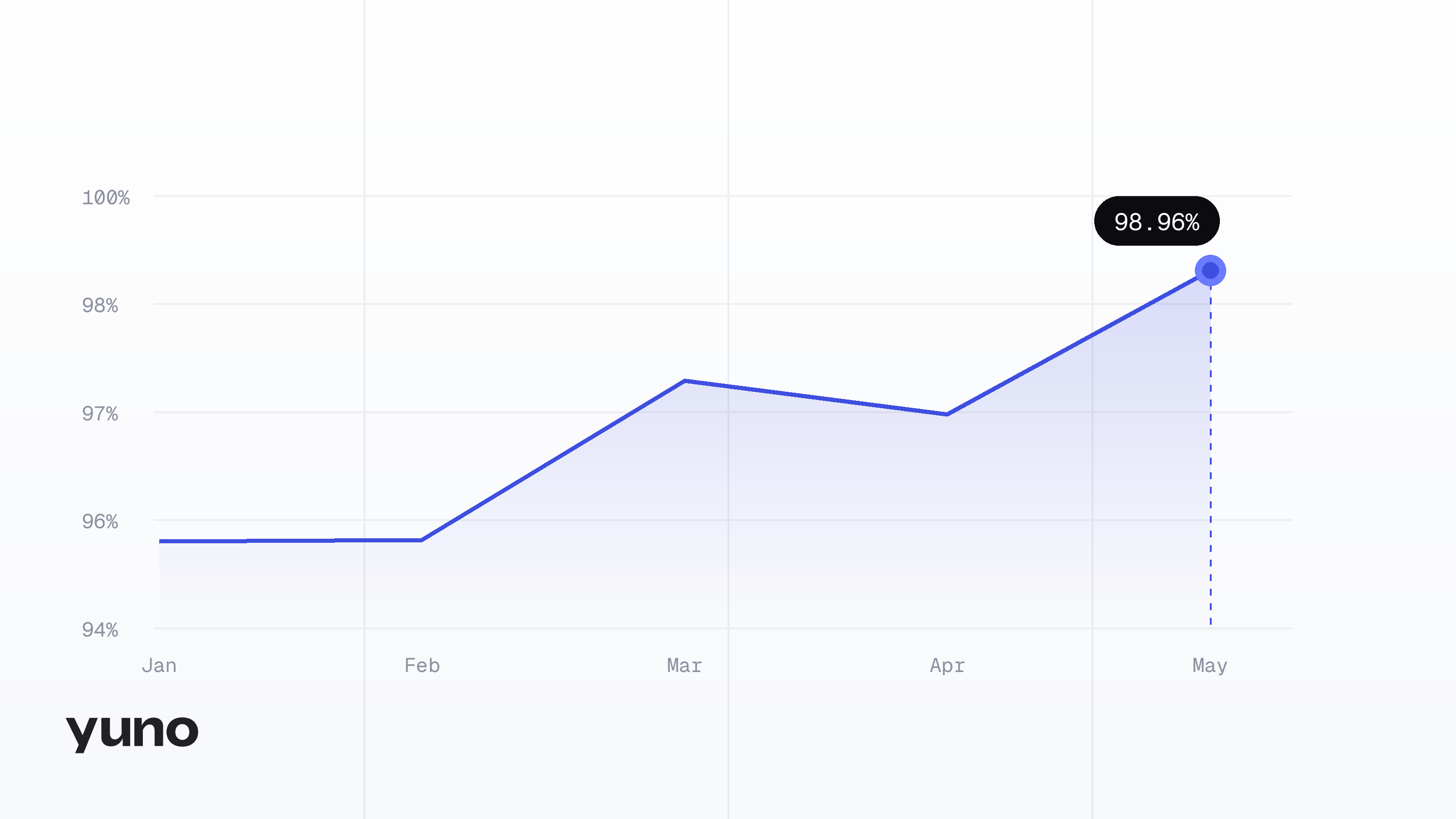
- Yuno's platform data shows an 8% average authorization rate uplift when smart routing resolves issuer-acquirer mismatches across enterprise merchants (Yuno platform data, 2026).
- The fix requires cross-PSP transaction outcome data indexed by issuer BIN, acquirer, geography, card scheme, and time of day simultaneously.
What is an issuer-acquirer pairing mismatch?
An issuer-acquirer pairing mismatch occurs when the acquiring bank and the issuing bank apply conflicting logic to the same transaction, producing a decline that has nothing to do with the cardholder's intent or ability to pay. The merchant sees a decline code. Neither bank surfaces the conflict. The cardholder often has no idea what happened.
Every card transaction travels through at least four actors: the cardholder's issuing bank, the card scheme, your acquiring bank, and your gateway or processor. Each actor applies its own rules independently. The issuer scores risk against its own velocity models. The acquirer formats and routes the authorization request using its own message logic. When the two sets of rules collide on a specific BIN, geography, or transaction type, the result is a false decline.
The structural problem is that neither party has visibility into the other's decision logic. Your acquirer does not know why the issuer declined. Your issuer does not know how your acquirer formatted the request. The merchant sits between them, absorbing the revenue loss.
Why decline codes are symptoms, not causes
Decline codes describe what the issuer returned, not why the issuer-acquirer pairing failed upstream. A "do not honor" response can mean genuine fraud risk, a velocity rule collision, a BIN-level geographic restriction, or an acquirer message formatting error — and the code looks identical in all four cases.
We've seen merchants spend months tuning retry logic on soft-decline codes, recovering a small fraction of transactions, while the underlying pairing mismatch keeps generating new failures at the same rate. The retry loop addresses the symptom. The pairing mismatch is the cause.
Three decline patterns that reliably signal a pairing mismatch rather than genuine fraud are worth flagging separately:
- "Do not honor" appearing on returning customers with clean fraud histories, particularly on cross-border transactions routing through a single acquirer.
- "Insufficient funds" on accounts where the cardholder immediately completes the same purchase on a different device or channel.
- "Restricted card" on internationally issued cards that approve consistently when routed through a different acquiring bank in the same geography.
The third pattern is especially diagnostic. When the same card approves on a different acquirer, the issuer was never the problem. The pairing was.
Why a single PSP cannot solve this problem
A single PSP only sees outcomes on its own rails, which makes cross-provider benchmarking structurally impossible for any individual provider. This is not a limitation of any specific provider's engineering; it is a data coverage problem that applies to every single-acquirer setup by definition.
Consider what a typical payment operations review looks like inside a single-PSP environment. You have approval rates, decline codes, and retry outcomes. You can identify that a specific BIN or issuer is declining at an elevated rate. What you cannot determine is whether that decline rate reflects a merchant-wide issuer policy, a genuine fraud signal, or a pairing mismatch that a different acquirer would avoid entirely. Without a benchmark from a second acquirer processing the same issuer BIN, there is no way to separate these three explanations.
This is the diagnostic gap that keeps approval rates stuck. The data needed to identify a pairing mismatch only exists when you are processing the same issuer BINs across multiple acquirers simultaneously. A platform sitting above a single provider will never generate that dataset.
From our work with enterprise marketplaces and subscription platforms, the most common scenario looks like this: a merchant has configured aggressive retry logic on a primary acquirer, recovered 20% to 30% of soft declines, and concluded that authorization rates are optimized. In reality, the remaining failures are concentrated in a small number of issuer-acquirer pairings that no amount of retry tuning will fix on those rails.
How cross-provider data exposes the mismatch
The only way to diagnose an issuer-acquirer pairing mismatch is to compare authorization outcomes for the same issuer BIN across at least two acquiring banks simultaneously. This requires a neutral infrastructure layer that sits above all providers and indexes outcomes by issuer, acquirer, geography, card scheme, and time of day.
When that dataset exists, the mismatch becomes visible immediately. A specific European issuer BIN might approve at 91% through one acquirer and 63% through another, on identical transaction profiles. Without cross-provider data, the 63% rate looks like an issuer problem. With it, you can see it is a routing problem.
Yuno's platform data shows this pattern consistently across enterprise merchants. The same issuer BIN, routed through a better-matched acquirer, often recovers 10 to 20 percentage points of authorization rate on those specific transactions. The aggregate effect across a full merchant portfolio is an average 8% authorization rate uplift (Yuno platform data, 2026). That number reflects what smart routing recovers by resolving pairings that single-PSP retries cannot reach.
The data structure that makes this diagnosis possible has five required dimensions. Issuer BIN and acquirer must both be present to identify the pairing. Geography captures cross-border and domestic routing differences. Card scheme separates Visa, Mastercard, and other network logic. Time of day captures issuer velocity window resets. Without all five, you are looking at aggregate approval rates that mask the pairing-level variance driving failures.
How smart routing fixes the pairing problem in practice
Smart routing resolves issuer-acquirer pairing mismatches by dynamically selecting the acquirer with the strongest historical approval record for each specific transaction's issuer BIN, geography, and card type. The routing decision happens before authorization, not as a retry after failure.
This distinction matters operationally. Retry-based recovery sends the failed transaction to a second acquirer after the issuer has already declined once. That sequence has two problems. First, the retry occurs on a declined transaction, which some issuers flag as a velocity signal. Second, the cardholder has already experienced failure. Pre-authorization routing prevents the decline from occurring in the first place, which improves both approval rates and cardholder experience simultaneously.
In our integrations across travel, retail, and subscription verticals, we've seen that the acquirers with the strongest approval records for a given issuer BIN are not always the ones merchants default to for cost or contract reasons. A mid-size European acquirer may outperform a global PSP on specific UK-issued consumer credit cards by 8 to 12 percentage points, purely because of how their authorization message formatting aligns with that issuer's risk models. Smart routing surfaces that pairing advantage and applies it automatically.
For merchants processing across multiple geographies, the pairing complexity compounds. A US-issued card processed through a European acquirer for a cross-border transaction involves a different set of issuer rules than a domestic UK card processed by a UK acquirer. Yuno's smart routing maintains separate pairing models per geography, so the routing logic reflects the actual approval rate variance at the market level rather than flattening it into a global average.
The operational cost of leaving this undiagnosed
False declines from pairing mismatches are not a one-time revenue loss; they compound through customer churn, chargebacks on re-attempted transactions, and the operational cost of retry infrastructure that addresses symptoms instead of causes. Enterprise merchants losing 9% to 20% of annual revenue to payment failures are not losing it uniformly across decline reasons (industry composite, 2025).
Based on our infrastructure, the revenue concentration in pairing mismatches is disproportionate. A merchant processing high volumes across four or five issuer markets will typically find that 60% to 70% of unrecovered authorization failures cluster in fewer than 10 issuer-acquirer pairings. Fixing those 10 pairings through smarter routing recovers the majority of the stuck revenue without changes to checkout, fraud rules, or retry configuration.
The operational implication is that approval rate optimization is a routing problem, not a checkout problem. Payment teams that approach it as a checkout problem spend resources on A/B testing payment forms, expanding local payment methods, and tuning 3DS configurations. These interventions have real value. But they do not touch the authorization layer where pairing mismatches live.
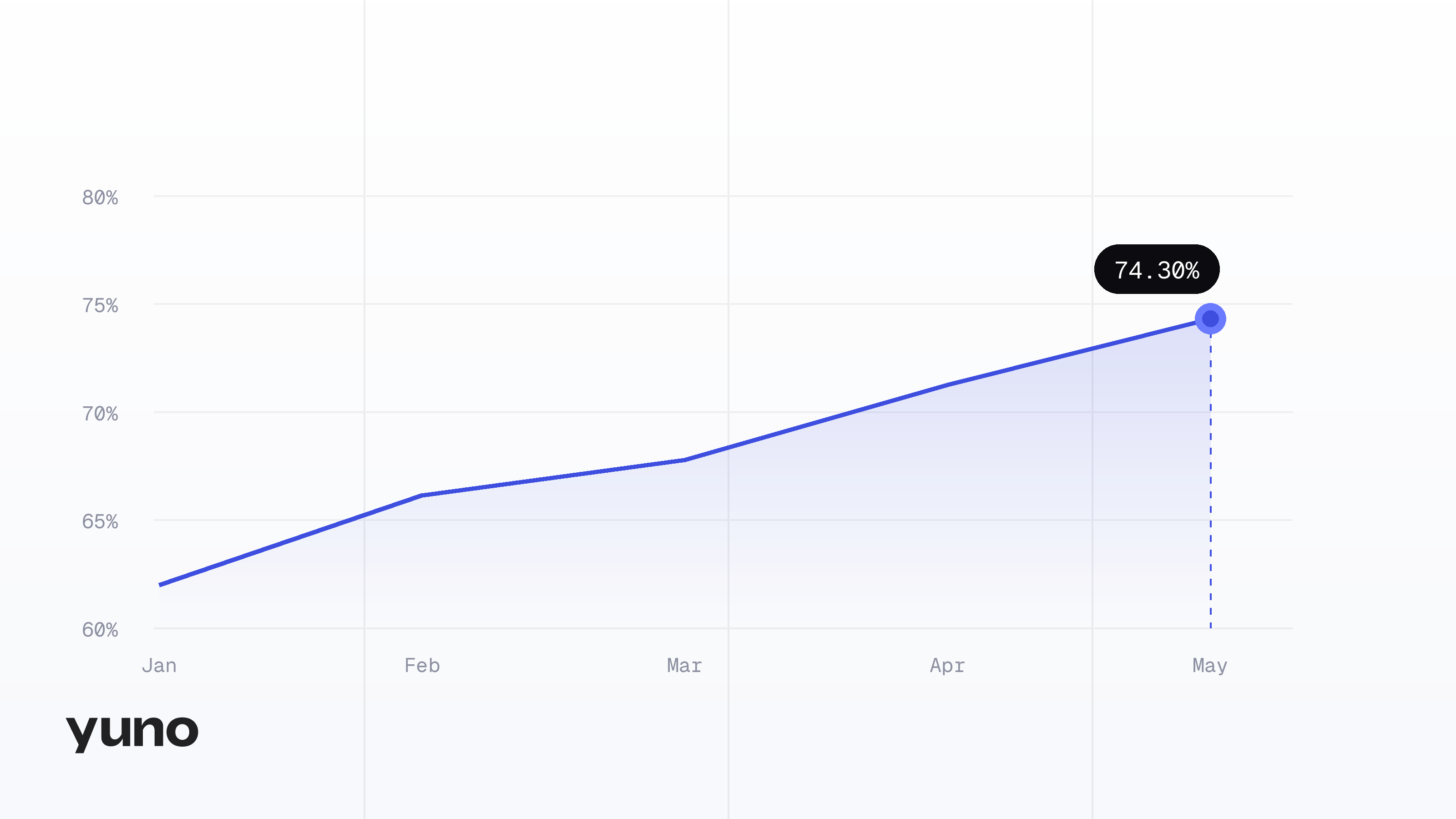
A global ride-hailing platform that consolidated multi-PSP routing through Yuno's infrastructure reached approximately 90% payment approval rates across more than 50 countries. The improvement came from routing intelligence applied at the acquirer selection layer, not from changes to the checkout experience itself.
What payment leaders need to audit first
The fastest way to identify whether pairing mismatches are suppressing your approval rates is to pull authorization outcomes segmented by issuer BIN and acquirer simultaneously, and look for BINs where approval rates diverge by more than 10 percentage points across providers. That divergence is a reliable signal that the mismatch is routing-driven, not issuer-policy-driven.
Most payment analytics tools within single-PSP dashboards do not surface this view. They aggregate by decline code or by issuer, but not by the pairing. If your current analytics setup cannot produce a report showing approval rates by issuer BIN crossed with acquirer, that is itself the diagnostic gap. Yuno's Analytics and Insights product surfaces this cross-provider view natively, because the platform processes all providers simultaneously and can index outcomes by pairing rather than by individual provider.
Three audits will confirm whether pairing mismatches are the root cause of your stuck approval rate:
- Segment authorization failures by issuer BIN and identify which BINs have the highest failure concentration. If fewer than 15% of your BINs account for more than 60% of failures, the problem is pairing-specific, not systemic.
- Compare the approval rate on those high-failure BINs across every acquirer in your stack. If approval rates diverge by more than 8 to 10 percentage points, the issuer is approving for some acquirers and declining for others. That is a pairing mismatch.
- Review whether your retry logic sends failed transactions to a different acquirer or retries on the same rails. If retries stay on the same acquirer, the retry is not addressing the pairing problem.
If your current infrastructure cannot run these three audits, the problem is data visibility before it is a routing problem. Merchants who want to improve payment approval rates but cannot segment by issuer-acquirer pairing are optimizing blind. The best practices for improving authorization rates globally consistently point back to this diagnostic step as the prerequisite for everything else.
The merchants consistently achieving the highest authorization rates across multiple markets are not doing anything exotic at the checkout layer. They are routing smarter at the acquirer selection layer, and they have the cross-provider data to prove which pairings are worth optimizing. That data advantage compounds over time as routing models accumulate more issuer-level outcome history. Starting that accumulation now is the only way to have it when authorization pressure increases.