There are three switching costs that reliably trap enterprise merchants in suboptimal authorization rates. Engineering effort to rebuild integrations is one. Compliance re-scoping is another. The third, and the least discussed, is token lock-in: your stored card credentials belong to your current processor, and moving them requires either a re-tokenization project or a cardholder re-authentication campaign. For merchants running $200M or more in annual card volume, that third constraint is often the decisive one. A solid tokenization platform should remove it entirely.
We built Yuno's network token architecture around the portability problem specifically. This post explains what scheme tokenization actually changes, how multi-acquirer portability works at the infrastructure level, and why Payment Concierge becomes meaningfully more powerful when the token layer is provider-agnostic.
Key Takeaways
- PSP-issued tokens lock stored card credentials to a single processor. Switching acquirers without a portable token vault triggers cardholder re-authentication at scale.
- Network tokens are issued by card schemes (Visa, Mastercard) directly. They survive PSP switches and carry real-time card lifecycle updates that reduce silent declines on card-on-file transactions.
- Multi-acquirer portability separates the credential layer from the routing layer. Engineering can add or replace processors without touching stored payment methods.
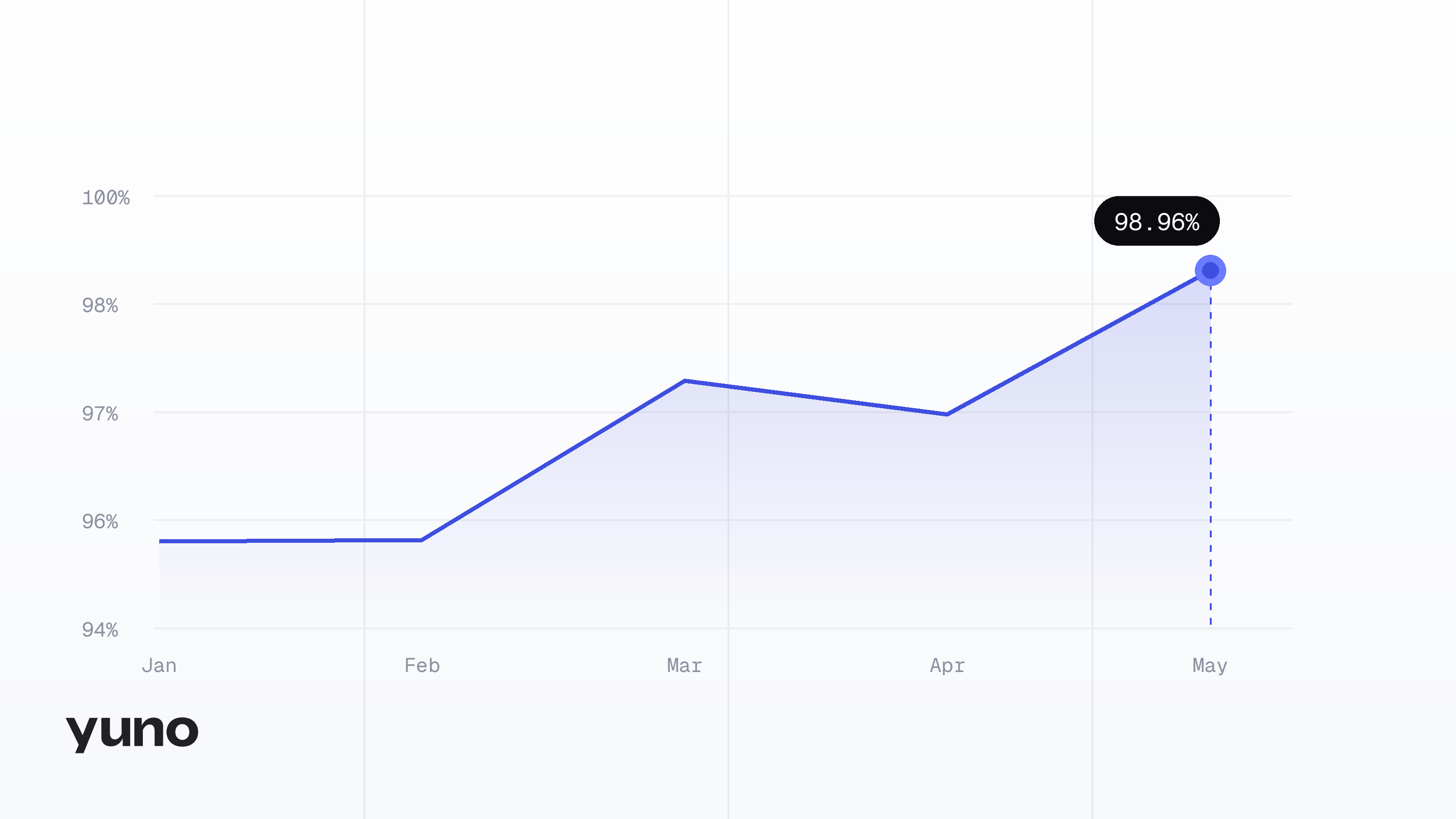
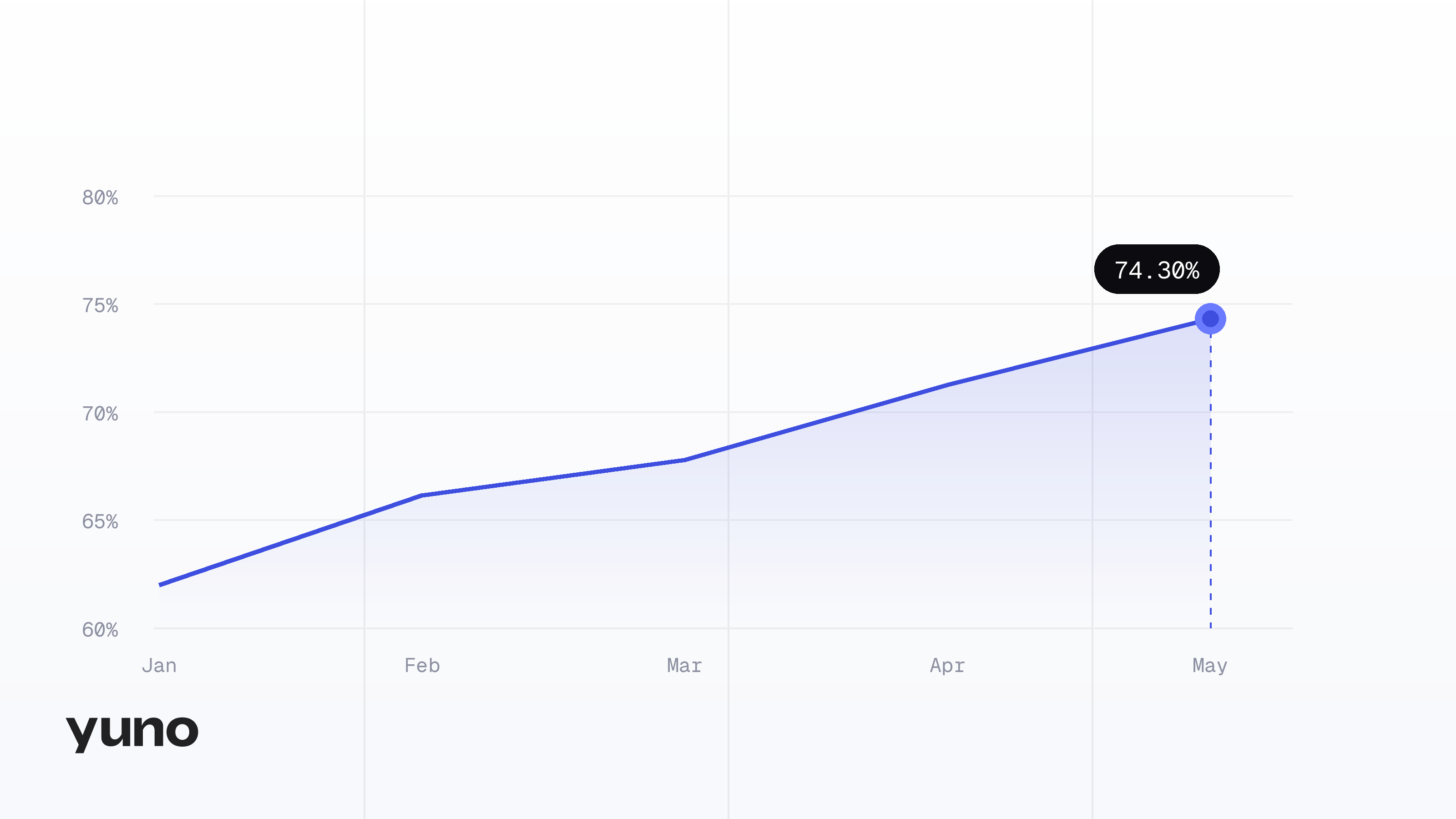
- Yuno's platform data shows an 8% average authorization rate uplift across enterprise merchants using smart routing with network tokens (Yuno platform data, 2026).
- Payment Concierge monitors token-level authorization performance in real time, detecting issuer-level rejection patterns before they compound into material revenue loss.
Why Stored Card Tokens Create Processor Lock-In
A PSP-issued token is a proprietary reference credential: it points to a raw card number stored in that processor's vault, and it has no meaning outside that processor's system. When a merchant moves volume to a second acquirer, or tries to replace an underperforming one, every stored card tied to the original processor becomes unusable on the new routing path.
The operational consequence is not abstract. A subscription merchant with two million active card-on-file relationships cannot silently migrate half that volume to a better-performing acquirer. They face a choice: run a cardholder re-authentication campaign, absorb a high silent-decline rate on migrated subscriptions, or stay with the underperforming processor indefinitely. We've seen all three outcomes across enterprise merchants who came to Yuno after years of single-processor dependency.
The root cause is architectural, not contractual. Most processors designed their token vaults to maximize stickiness, not portability. Changing that requires moving the token vault outside the processor relationship entirely, which is precisely what network tokenization enables.
What Scheme Tokenization Actually Is (and What It Is Not)
A network token is a payment credential issued by a card scheme, Visa or Mastercard, that represents a specific card number on a specific device or merchant channel. Unlike a PSP token, it is valid across any acquirer that participates in the scheme's token service.
Two properties make network tokens categorically different from their PSP equivalents. First, the card scheme maintains a live binding between the token and the underlying PAN. When a card is reissued, the token updates automatically. Merchants no longer receive silent declines because a subscriber's card expired six months ago and the processor never heard about it. Second, the token itself travels with richer authentication context. Issuers recognize network tokens as higher-assurance credentials, which directly improves authorization rates at the issuer side.
What network tokenization is not: it is not a PCI DSS substitute. Scheme tokenization reduces PCI scope by removing raw PANs from your environment, but your card-on-file implementation still requires full PCI DSS Level 1 certification to operate at enterprise scale. Yuno holds that certification, and we handle the compliance infrastructure so your engineering team does not have to maintain it internally.
How Multi-Acquirer Portability Changes the Routing Calculus
Multi-acquirer portability means the token vault sits at a layer above any individual processor, so routing decisions and credential storage become independent concerns. Engineering can add a new acquirer, rebalance volume across existing ones, or deprecate an underperformer without touching the stored payment method records.
The practical routing benefits compound quickly once the architecture is in place. Consider a merchant running card-on-file subscriptions across Germany, Indonesia, and Mexico. A single acquirer rarely produces top authorization rates in all three markets simultaneously. iDEAL dominance in the Netherlands and GrabPay penetration in Southeast Asia aside, even within card-based payments, issuer relationships, local network routing rules, and interchange optimization vary significantly by region and card brand. With a portable token vault, the same stored credential can be routed through the acquirer most likely to approve in each market on each transaction attempt.
From our infrastructure, the failure mode that surfaces first with single-acquirer token setups is approval rate volatility. An acquirer has a degraded connection to a specific issuer for six hours. Every subscription retry during that window fails. With multi-acquirer routing and portable tokens, the system detects the degradation and reroutes those retries through an alternative path in milliseconds. The cardholder never knows. The revenue does not disappear.
How Yuno's Tokenization Platform Handles Multi-Acquirer Token Management
Yuno acts as the neutral token vault, holding network token credentials independently of any specific processor relationship. Merchants connect once via Yuno's unified API and gain routing access across 1,000+ payment methods and 200+ countries, with token portability built into the credential layer from day one.
The architecture matters for three reasons specific to enterprise engineering teams.
- There is no re-tokenization event when a new acquirer is added. The token is already scheme-issued and acquirer-agnostic. Adding a processor to the routing table is a configuration change, not an infrastructure project.
- The routing engine has full visibility into token eligibility per transaction. Not every issuer in every market participates in scheme tokenization at the same coverage level. Yuno's routing logic checks token eligibility at the transaction level and adjusts the credential type and routing path accordingly. Your engineering team does not write conditional logic for this. The platform handles it.
- Yuno is strictly neutral. We do not sell acquiring. We do not route volume to our own rails. Routing decisions are based entirely on authorization rate data, cost, and performance signals from across your PSP stack. That neutrality is what makes multi-acquirer comparison meaningful. Only a non-acquiring infrastructure layer can compare all your providers without a conflict of interest.
First, there is no re-tokenization event when a new acquirer is added. The token is already scheme-issued and acquirer-agnostic. Adding a processor to the routing table is a configuration change, not an infrastructure project. McDonald's LATAM unified payment operations across 21 countries through Yuno's routing and tokenization layer, including stronger recurring payments performance through tokenization, without rebuilding the credential store for each market (Yuno customer case study, Arcos Dorados).
Second, the routing engine has full visibility into token eligibility per transaction. Not every issuer in every market participates in scheme tokenization at the same coverage level. Yuno's routing logic checks token eligibility at the transaction level and adjusts the credential type and routing path accordingly. Your engineering team does not write conditional logic for this. The platform handles it.
Third, Yuno is strictly neutral. We do not sell acquiring. We do not route volume to our own rails. Routing decisions are based entirely on authorization rate data, cost, and performance signals from across your PSP stack. That neutrality is what makes multi-acquirer comparison meaningful. Only a non-acquiring infrastructure layer can compare all your providers without a conflict of interest.
What Payment Concierge Adds to Token-Level Monitoring
Payment Concierge is Yuno's AI operations assistant: it monitors the entire payment stack in real time and surfaces authorization anomalies, issuer-level rejection patterns, and routing recommendations through natural language. For card-on-file merchants, this is where the tokenization platform becomes an active revenue protection layer, not just a credential store.
Here is a pattern we see regularly. A merchant's subscription authorization rate drops 2.3 percentage points on a specific card brand in one market over a 48-hour window. Without proactive monitoring, that drop goes undetected until a weekly reporting cycle. By then, thousands of failed retries have accumulated, and involuntary churn is already compounding.
Payment Concierge detects the anomaly in real time. It surfaces the issuer-level rejection codes driving the drop, identifies whether the issue is routing-related or credential-related, and recommends a specific routing adjustment. Payment teams ask the question in Slack or WhatsApp in plain English. They get a data-backed answer in seconds, not after navigating multiple dashboards or querying a database manually.
The combination of portable network tokens and real-time AI monitoring closes a gap that is genuinely difficult to close otherwise. The token layer removes the structural switching cost. The monitoring layer ensures you are always routing to the highest-performing path for each token. Together, they produce the 8% average authorization rate uplift we observe across enterprise merchants on Yuno's smart routing (Yuno platform data, 2026).
Rappi's payments team faced exactly this operational challenge before implementing Yuno's Monitors capability alongside orchestration. With over 20 processors active simultaneously, manual response to provider issues previously took minutes. After implementation, anomaly detection and rerouting dropped to milliseconds, representing a fundamental change in how fast revenue-threatening events can be contained (Yuno customer case study, Rappi).
The Authorization Rate Case for Scheme Tokenization
Network tokens produce higher authorization rates than raw PANs for a specific reason: issuers treat them as higher-assurance credentials, and the card scheme keeps the token-to-PAN binding current in real time. The two failure modes that network tokens eliminate are silent declines from stale card data and issuer friction from unrecognized credential formats.
Silent declines from stale data are a persistent leak in card-on-file economics. A subscriber's card is reissued after a fraud event. The new PAN is different. The stored credential is now wrong. The merchant retries, gets a decline, and eventually churns the customer involuntarily. With a network token, the scheme updates the underlying PAN binding when the card is reissued. The merchant's stored token stays valid. The authorization attempt succeeds.
The issuer assurance effect is less visible but equally significant. When a network token arrives at an issuer with a proper scheme-verified cryptogram, the issuer's fraud model scores the transaction differently than a raw PAN with no authentication signal. Across high-volume card-on-file portfolios, that scoring difference accumulates into authorization rate points that show up directly in revenue. In our integrations across subscription and marketplace verticals, the merchants who see the largest uplift from switching to network tokens are typically those with the oldest stored credential bases, where stale data accumulation has been silently eroding their approval rates for years.
How to Audit Your Current Token Architecture
The starting point for any multi-acquirer token migration is understanding where your current tokens live and what happens to them under each PSP scenario. Most enterprise merchants have not mapped this explicitly, because the question only becomes urgent when a PSP switch is already in motion.
Start with four questions:
- Are your stored card tokens issued by your PSP, or by a card scheme? If you cannot answer this immediately, your tokens are almost certainly PSP-issued.
- What percentage of your card-on-file volume runs through a single acquirer? This is your lock-in exposure.
- What is your current authorization rate on card-on-file transactions versus card-present or manually entered transactions? A persistent gap often indicates stale credential issues that network tokens would resolve.
- How long would a full re-tokenization project take your engineering team, and what is the estimated revenue impact of cardholder friction during migration? This is the actual cost of your current architecture.
The answers define your migration priority. Merchants with high subscription volume, large active card-on-file bases, and authorization rates below 90% on recurring transactions typically see the fastest ROI from moving to a portable network token architecture.
The practical starting point is integrating a tokenization platform that holds credentials at the scheme level and above the processor layer. That single architectural change eliminates the re-tokenization event for every future PSP addition, and gives your routing engine the freedom to optimize across providers without credential constraints.
If your current approval rates have unexplained gaps by market, card brand, or transaction type, that is where to start. Payment Concierge can run that analysis across your full PSP stack immediately, surfacing where token quality, routing configuration, or issuer relationships are most likely driving the variance.