The rate card says 2.9%. The invoice says something else. When a global ride-hailing platform we work with first ran an effective-rate audit across its European and North American providers, the gap between quoted and actual cost was over 80 basis points. That gap, multiplied across tens of millions of transactions, was a nine-figure annual difference. Hidden fees in payment processing rarely announce themselves. They compound quietly across every provider, every card type, and every failed transaction your routing logic never recovered.
Key Takeaways
- Effective processing rates run 30-60 basis points above headline rates once cross-border surcharges, card-type premiums, and chargeback fees are included.
- Enterprise merchants lose 9-20% of annual revenue to payment failures, most of which never appears on a processing fee invoice (industry composite, 2025).
- Yuno's smart routing delivers an average 8% authorization rate uplift, recovering revenue that fee-reduction negotiations alone cannot reach (Yuno platform data, 2026).
- Multi-PSP stacks without a routing layer generate reconciliation overhead and token fragmentation that offset most rate savings from provider diversification.
- A neutral orchestration layer gives merchants cross-provider performance data no single PSP can supply, creating real leverage in rate negotiations.
Where Hidden Fees in Payment Processing Actually Live
Hidden fees in payment processing are the difference between the rate a provider quotes and the effective rate a merchant actually pays after all surcharges, card-type premiums, and operational costs are counted. They accumulate across four distinct layers, and most cost-reduction efforts target only the first one.
The first layer is the card-type gap. Amex, corporate cards, and international consumer cards carry interchange rates that can run 60-100 basis points above a standard domestic Visa debit rate. A provider advertising 2.9% often applies that rate only to the cheapest card segment. Every Amex authorization, every cross-border corporate card, and every premium rewards card processes above that number.
The second layer is the cross-border surcharge. Processors apply currency conversion fees, foreign card fees, and scheme fees on top of interchange whenever the issuing bank is outside the acquiring country. For merchants processing volume across the US, Europe, and the UK, this layer alone can add 40-70 basis points to the effective rate on a significant share of transactions.
The third layer is chargeback and dispute overhead. Chargeback fees typically run $15-35 per dispute. Dispute management, representment costs, and the write-off on lost cases rarely show up in per-transaction cost models. For merchants in high-dispute verticals such as travel, digital goods, or subscription billing, this layer can equal or exceed the processing fee on affected transactions.
The fourth layer is the most invisible: failed payment cost. A declined transaction still consumes scheme fees on the authorization attempt. Retry logic that bounces a transaction across multiple providers compounds those attempt fees. And the downstream cost, customer support contacts, cart abandonment, and subscription churn, never appears on a payment processing invoice at all. Enterprise merchants lose 9-20% of annual revenue to payment failures (industry composite, 2025), and almost none of that shows up in a standard fee reconciliation report.
We've seen this pattern across every vertical we operate in. The merchants who think they have a rate problem often have a routing and recovery problem that rate negotiation alone cannot fix. A deeper look at the hidden costs of payment failures for enterprise merchants shows how the failure layer typically dwarfs the headline fee gap.
Why Multi-PSP Stacks Often Increase Effective Costs
Adding a second or third PSP creates rate optionality on paper, but without a routing layer to enforce it, the operational overhead of managing multiple providers frequently offsets any savings. This is the consolidation paradox we observe across enterprise merchant infrastructure.
Reconciliation is the first place the math breaks down. Each PSP delivers settlement reports in a different format, on a different cadence, and with different dispute workflows. Finance teams reconciling across five providers manually spend analyst hours that have a real cost. That cost is almost never loaded into effective-rate calculations, which means the "cheaper" secondary provider often looks cheaper than it is.
Token portability is the second underestimated problem. Each PSP vault holds tokens in a proprietary format. A card tokenized with one provider cannot be authorized through another without re-vaulting, which requires either a customer re-entry event or a network token migration. Merchants who build multi-PSP stacks without solving token portability end up routing by which provider holds the token, not by which provider offers the best approval rate or cost. The routing decision is made by infrastructure accident, not by commercial logic.
The third cost is monitoring overhead. A PSP experiencing approval rate degradation at 2 AM on a Saturday will not send an alert calibrated to your approval rate thresholds. Your ops team finds out when volume drops, or a customer escalates, or you pull Monday's reconciliation. By then, the failed transaction cost and abandonment cost are already locked in. Merchants running five providers without automated monitoring are running five simultaneous blind spots. The operational drag of managing fragmented stacks without orchestration is detailed in our analysis of the hidden cost of running multiple PSPs without an orchestration layer.
How a Neutral Routing Layer Reduces Effective Processing Costs
A neutral orchestration layer reduces effective processing costs by directing each transaction to the provider with the best combination of approval probability and cost for that specific card, geography, and transaction type. The key word is neutral: a layer that owns no acquiring rail has no incentive to favor any provider.
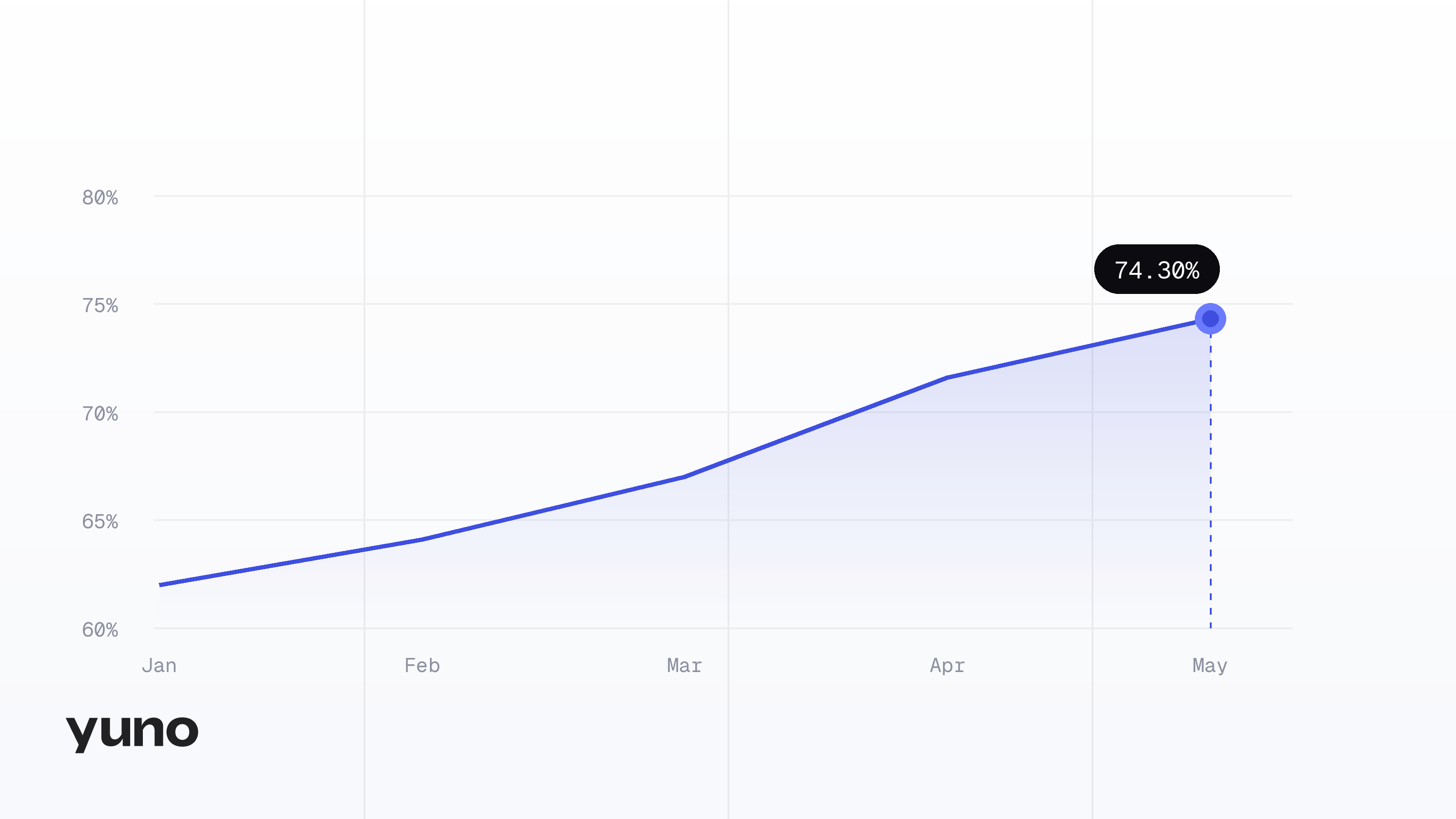
Yuno's platform data shows an average 8% authorization rate uplift from smart routing across enterprise merchants (Yuno platform data, 2026). That number matters more than it might appear. A recovered authorization costs only the processing fee on a successful transaction. A failed authorization costs the scheme fee on the attempt, the retry fees, and the downstream abandonment cost. Approval rate improvement and cost reduction are the same problem viewed from different sides.
Routing logic operates at the transaction level, not the portfolio level. For a given BIN range from a UK-issued corporate Mastercard processing in euros, the routing engine evaluates which provider's approval rate on that specific combination is highest, what the effective cost differential is, and whether any provider has shown degraded performance in the last 30 minutes. That decision is made in milliseconds, before the authorization request leaves the merchant's infrastructure.
Fallback routing adds a second recovery layer. When a primary provider declines a transaction, the orchestration layer retries with an alternate provider under pre-configured conditions, without customer re-entry. Yuno's platform data shows 8% of transactions recovered via fallback routing (Yuno platform data, 2026). For a merchant processing $500M annually, 8% recovery on failed volume is a material revenue line, not a rounding error.
The commercial leverage effect is the most underutilized benefit. A neutral orchestration layer accumulates cross-provider performance data no single PSP can generate internally. A merchant can walk into a rate renegotiation with a PSP showing exactly where that provider's approval rate on UK corporate cards trails its competitor by 200 basis points. That data converts a conversation about pricing into a conversation about performance, and it almost always results in a better commercial outcome.
What Platforms Actually Do to Surface and Eliminate These Costs
Platforms that reduce effective processing costs combine real-time routing with unified visibility: every provider, every method, and every market in a single operational view. The visibility layer is what most point solutions skip, and it is where the largest recoverable costs sit.
From our integrations across enterprise commerce, the merchants who reduce effective rates fastest share one operational pattern: they instrument the full cost stack before they touch routing logic. That means calculating effective rate per card type, per geography, and per provider, not just portfolio-wide. A portfolio effective rate of 3.1% can contain a 2.7% domestic Visa cost and a 4.2% international Amex cost blended together. Routing optimization requires that granularity.
Payments Concierge, Yuno's AI operations agent, surfaces exactly this kind of analysis in real time. A head of payments can ask in natural language which provider is underperforming on UK corporate card approvals this week, receive a side-by-side comparison with actionable routing recommendations, and reroute volume without an engineering ticket. The analysis that previously required an analyst and a BI query runs in seconds inside Slack or WhatsApp. That speed matters because approval rate degradation that goes undetected for a week at enterprise volume is a significant cost event by the time it is caught.
Real-time monitoring closes the blind-spot problem. Custom thresholds by provider, geography, card brand, and currency trigger automated rerouting when an anomaly is detected. A PSP degrading at 2 AM gets traffic shifted to an alternate provider automatically, with the ops team notified simultaneously. The revenue loss window shrinks from hours to milliseconds. For a large on-demand delivery platform we work with, this shift from manual monitoring to automated response changed their incident resolution time from minutes to milliseconds, and reduced analyst time spent on disruption handling by 80%.
NOVA, Yuno's AI payment recovery agent, operates at the post-decline layer. When a transaction fails and cannot be recovered by fallback routing, NOVA contacts the customer via WhatsApp or voice in over 70 languages, guiding them through recovery without manual intervention. Up to 75% of contacted customers complete the transaction (Yuno product data, 2026). That recovery rate applies to revenue that standard routing optimization never touches: transactions that failed for payment method or customer-side reasons rather than provider-side reasons.
The mechanics of building this kind of multi-acquirer cost optimization are covered in more detail in our guide to reducing transaction costs with multi-acquirer payments.
A Practical Audit for Heads of Payments
Reducing effective processing costs starts with an audit structured around four specific data pulls, not a general review of your rate card. Most cost reduction efforts stall because they start with a vendor conversation rather than a data diagnosis.
Pull these four reports before any rate negotiation or routing change:
- Effective rate by card type: Divide total fees paid per card segment by total volume processed per card segment. Compare domestic debit, domestic credit, international consumer, and corporate cards separately. Any segment running more than 60 basis points above your headline rate is a routing or negotiation target.
- Approval rate by provider and BIN range: Aggregate authorization outcomes by provider, card brand, and issuing country. Approval rate gaps of 2-5 percentage points across providers on the same card type represent routing inefficiency, not customer behavior.
- Failed transaction cost by category: Separate hard declines (unrecoverable) from soft declines (retriable) from technical failures (provider-side). Soft declines and technical failures are recoverable with routing or retry logic. Hard declines require a different response.
- Reconciliation overhead hours: Count the analyst hours spent reconciling settlement across all providers in a given month. Multiply by your fully-loaded analyst cost. If this number exceeds $10,000 per month, operational overhead is a material cost item, not a background process.
This audit produces four numbers that quantify the gap between your current effective rate and your achievable effective rate. The gap between headline and effective rates typically runs 30-60 basis points in our experience across enterprise stacks. Closing even half of that gap through routing optimization and recovery tooling delivers more bottom-line impact than most rate renegotiations achieve in a single contract cycle.
For merchants who want a structured methodology for running this analysis across multiple providers, our guide on how to reduce payment processing costs across providers walks through the full process.
The Takeaway for Payment Leaders
Effective processing cost reduction is a routing and visibility problem first, and a rate negotiation problem second. The merchants who close the gap fastest treat their payment stack as a performance system with measurable outputs, not a cost center with fixed inputs.
The four-part audit above takes less than a week to complete with existing data. It will reveal where hidden fees in payment processing are compounding in your stack, which providers are underperforming on specific card and geography combinations, and how much failed transaction cost is sitting outside your current recovery logic. That diagnosis determines whether the next step is routing reconfiguration, provider negotiation, or recovery tooling. Starting with the data means every subsequent decision is backed by numbers a CFO or board can act on.
Yuno's platform connects to over 1,000 payment methods across more than 200 countries, with neutral routing logic that carries no rail ownership and no provider conflict. The routing decision is always made on the merchant's terms, with full visibility into what drove it.