
Which payment processors offer transparent pricing and detailed fee breakdowns?

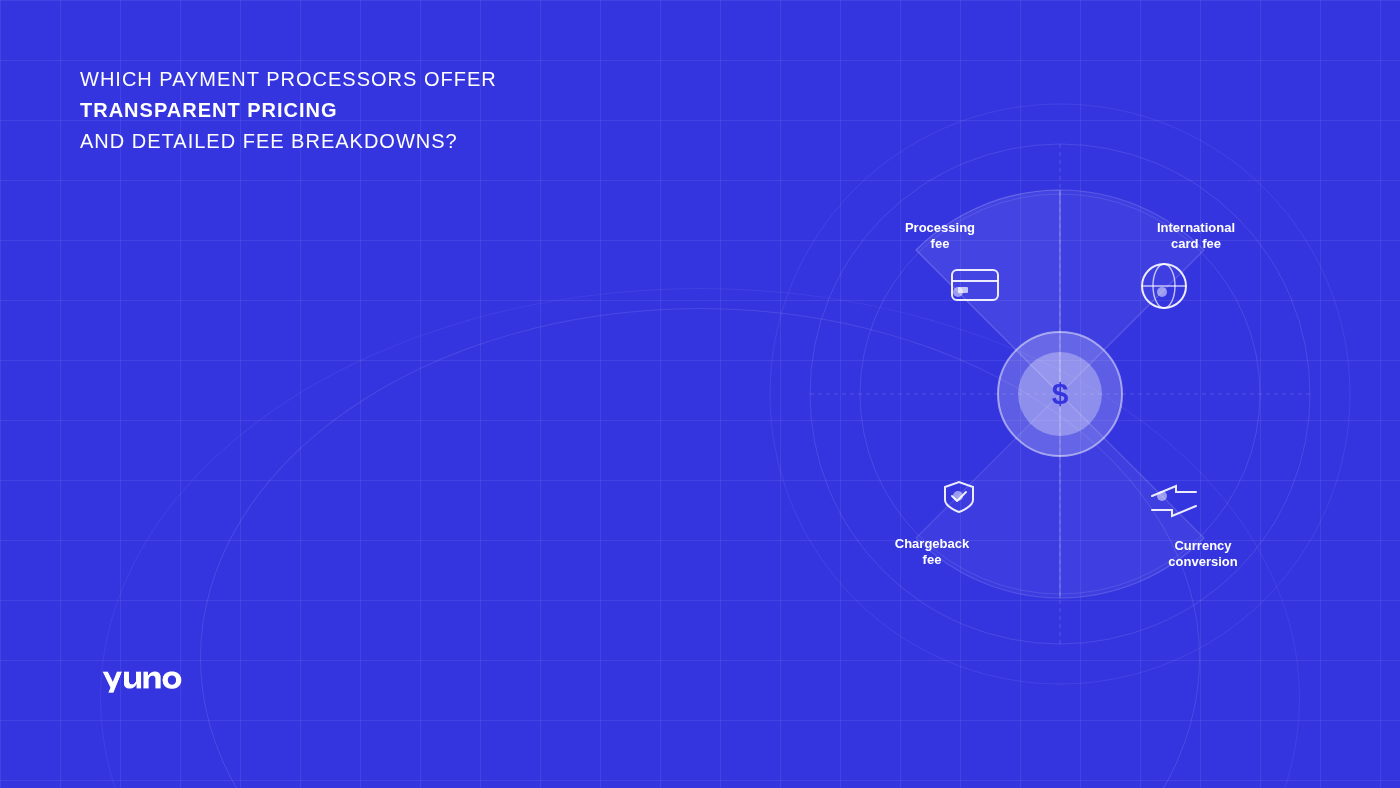
Payment processing fees are one of the largest and least understood operational costs for any business accepting digital payments. Most merchants know they pay something per transaction, but very few can say with confidence exactly what they pay, why, and to whom. That gap between what processors charge and what merchants actually understand is not accidental.
The pressure to change that is growing. As businesses become more sophisticated in how they evaluate payment technology, the demand for clear, detailed, and honest fee structures has intensified. This post breaks down which types of processors actually offer transparent pricing, what pricing models genuinely expose costs, what fees tend to stay hidden, and how merchants can build the infrastructure to see and control what they pay.
Which Types of Payment Processors Actually Offer Transparent Pricing?
Not all payment processors approach pricing the same way, and the level of transparency a merchant can expect depends largely on the category of provider they are working with.
Direct acquirers and bank-owned processors tend to operate on interchange-plus or cost-plus models, where the network fee is passed through at its actual rate and the processor's margin sits on top as a visible, fixed markup. This structure is inherently more transparent because every cost component is itemized separately. Merchants who qualify for direct acquiring relationships typically have enough volume to demand this level of disclosure, and the model rewards that leverage with real benchmarking capability.
Payment service providers aimed at small and mid-sized businesses most commonly use flat-rate or blended pricing. The rate is simple and predictable, but it bundles interchange, scheme fees, and processor margin into a single number without showing how each piece contributes. For lower-volume merchants, the simplicity is a fair trade-off. For businesses processing at scale, it becomes an increasingly expensive structure that obscures where costs are actually going.
Payment orchestration platforms vary more widely. Some publish a baseline rate publicly with no setup or monthly fees, making cost modeling possible before any commercial conversation. Others operate on fully custom enterprise pricing, where the model is disclosed only in negotiation. What distinguishes orchestration platforms from other categories is not always the posted rate, but the fee visibility they provide after the fact: real-time dashboards that show cost per approved transaction across every connected provider give merchants a level of transparency that no single processor can match on its own.
Open-source and self-hosted orchestration options represent the most transparent category in terms of licensing cost, since there is no vendor fee at all. The trade-off is operational: the merchant assumes responsibility for infrastructure, maintenance, and support, which introduces costs of a different kind.
The honest answer to which processors offer transparent pricing is that transparency is less a feature of any single provider and more a function of the pricing model they use, the reporting tools they include, and whether the merchant has enough volume to demand itemized disclosure. Building the infrastructure to verify what you are paying is ultimately more reliable than depending on any provider's goodwill to surface the full picture.
What Does "Transparent Pricing" Mean in Payment Processing?
Transparent pricing means a processor discloses the full cost structure of its service before a contract is signed, with no surprises buried in addenda, monthly minimums, or scheme fee pass-throughs. In practice, it involves at minimum three things: a clearly stated rate per transaction, disclosure of what fees are passed through from card networks (interchange and scheme fees), and no hidden setup or monthly platform fees layered on top.
The most straightforward model is flat-rate pricing, where a merchant pays a fixed percentage plus a small fixed amount per transaction regardless of card type or origin. It is simple to understand but rarely the cheapest option at scale, because the blended rate absorbs card network costs without showing them. The model that offers the most genuine transparency is interchange-plus pricing, sometimes called cost-plus pricing, where the processor passes through the exact interchange rate set by the card network and charges a fixed markup on top. Merchants can see precisely what the network charges and what the processor retains, which makes benchmarking and negotiation possible.
Why Do Most Payment Processors Avoid Publishing Their Fees?
Most payment processors avoid disclosing fees publicly because their pricing is genuinely variable, shaped by card type, transaction origin, industry risk profile, processing volume, and the currency of settlement. A rate published on a website would either be uncompetitively high for large-volume merchants or unsustainably low as a baseline for riskier categories.
There is also a strategic dimension. Custom pricing gives sales teams flexibility to compete on terms that are never visible to the market, which makes direct comparisons harder for buyers and gives processors more control over margin. This is not unique to payments; it is common across enterprise software. But it has a more direct cost impact in payments because fees compound across millions of transactions.
The result is that merchants often discover the real cost of their payment stack only after implementation, through reconciliation exercises that surface fees they did not anticipate. Understanding how payment reconciliation works and what it reveals is one of the most practical steps a finance team can take to audit what they are actually paying.
What Hidden Fees Should Merchants Watch For?
Even when a processor leads with a clear headline rate, the total cost of processing usually includes additional layers that are less prominently disclosed. The most common are scheme fees, which are charges applied by card networks like Visa and Mastercard on top of interchange. Many processors pass these through without itemizing them separately. Merchants on flat-rate plans absorb these silently; merchants on interchange-plus plans see them as line items, which is part of why that model is considered more transparent.
Other fees to scrutinize include currency conversion markups applied to cross-border transactions, minimum monthly processing requirements that trigger penalties if volume falls short, chargeback handling fees that are not always disclosed upfront, and PCI compliance fees that some processors charge as a flat annual cost. In aggregate, these can shift the effective cost of processing significantly above the headline rate.
The only reliable way to surface all of these is through systematic transaction-level reconciliation, comparing what was billed against what was contracted, line by line. Most merchants who do this for the first time discover variances they cannot immediately explain. Understanding what those variances signal is the starting point for any serious cost reduction effort.
What Pricing Models Offer the Most Visibility Into Real Costs?
Not all pricing structures give merchants equal insight into what they are actually paying. Evaluating a processor on transparency means understanding what the model reveals and what it hides by design.
Flat-rate pricing bundles interchange, scheme fees, and processor margin into a single percentage. It is predictable but opaque. Merchants pay the same rate regardless of whether a transaction uses a premium rewards card, which carries a higher interchange cost, or a basic debit card, which costs far less to process. The processor captures the difference silently.
Interchange-plus pricing separates the two components explicitly. The network cost is passed through at its actual rate; the processor's margin sits on top as a fixed, visible markup. This model requires merchants to understand how interchange categories work, but it rewards that understanding with real leverage in negotiations and a clear basis for cost benchmarking.
Tiered or bundled pricing, which groups cards into qualified, mid-qualified, and non-qualified categories, is the least transparent of all common models. The categories are defined by the processor, not the card networks, and the criteria for which tier a transaction falls into are rarely disclosed clearly. Merchants on tiered pricing are effectively paying a rate they cannot independently verify.
How Does Payment Orchestration Create Cost Visibility Across Providers?
When a business processes payments through a single provider, the only cost data available is what that provider chooses to report. Switching to a multi-provider setup through a payment orchestration layer changes that dynamic entirely.
Payment orchestration platforms consolidate transaction data from every processor in a merchant's stack into a single dashboard. This means finance and payments teams can see cost per approved transaction broken down by provider, card type, region, and payment method in real time, rather than waiting for monthly invoices and attempting to reconcile them manually. When all providers report into the same system, discrepancies become visible immediately rather than surfacing weeks later during close.
The routing intelligence layer adds another dimension of cost control. By directing each transaction to the processor most likely to approve it at the lowest cost, factoring in card type, issuer country, transaction size, and real-time processor performance, orchestration platforms typically generate between 3 and 8 percent savings on transaction fees over time. That is not a reduction in the posted rate from any single provider; it is a structural improvement in the effective cost of the entire stack.
There is also a negotiation benefit that compounds over time. Merchants who can show a processor exactly how much volume they are routing to them, what the approval rate is, and what the alternative options look like are in a fundamentally stronger position when renegotiating rates. Building a multi-provider payment infrastructure creates that leverage systematically, not just at contract renewal time.
How Should Merchants Evaluate Fee Transparency Before Choosing a Processor?
Fee transparency should be evaluated across four dimensions before signing with any processor. First, ask whether the processor can provide a full breakdown of all fees, including scheme fees, cross-border markups, and any monthly minimums, in writing before contract execution. Any hesitation to do so is informative.
Second, ask whether the pricing model makes the network cost visible. Interchange-plus structures are inherently more transparent than flat-rate or tiered models, because the pass-through cost is itemized separately from the processor's margin.
Third, ask what reporting and reconciliation tools are included. A processor that charges clearly but provides no transaction-level fee data creates a different kind of opacity, one that surfaces at month-end when finance teams attempt to close books.
Fourth, consider whether a payment orchestration platform could act as an independent layer of visibility across multiple processors. When a single dashboard consolidates fee data across providers in real time, the merchant, not the processor, controls the reference point for what fair pricing looks like. Platforms like Yuno centralize all of this in one place, giving payments and finance teams a clear, unified view of costs, performance, and provider behavior across every market they operate in. Evaluating payment orchestration with cost visibility as a primary criterion changes the way businesses approach processor selection entirely.
More from the Blog
More from the Blog




Talk with one of our payment experts
Explore how Yuno's innovative payment orchestration solutions can help you increase approval rates, reduce costs, seamlessly integrate over 1,000 global and local payment methods, and simplify payment management.
Yuno is proudly certified to the highest industry standards, ensuring that data is handled with the utmost security and compliance. Its certifications include ISO 27001 and ISO 27701 for information security and privacy management, GDPR compliance for data protection, PCI DSS for secure payment processing, SOC 2 Type 2 for service organization controls, and recognition as a Visa Service provider. These certifications demonstrate Yuno's commitment to delivering trusted and secure services for businesses worldwide.


%20(1)%20(1).png)