Sending payments to partners, contractors, suppliers, or even customers is part of the day-to-day operations of almost any online marketplace or ecommerce business. While it sounds simple, this process - known as a payout - is actually very complex. A payout provider simplifies this process by offering a platform that automates and manages the distribution of funds domestically or internationally.
What is a payout provider?
As the name suggests, a payout provider provides a platform that streamlines and simplifies payouts, such as customer refunds or payments to vendors, suppliers, or partners. Payout providers typically process payouts through various payment methods, including bank transfers, digital wallets, and card payments, ensuring that recipients receive funds in their preferred manner.
Benefits of using a payout provider
1. Integrate multiple payment methods
Payees may have different preferences for payment methods - some may prefer a bank or ACH transfer, while others might want to use a digital wallet. A payout provider enables businesses to integrate multiple payment methods to accommodate various payee preferences.
2. Enhanced payment processes
Facilitating payouts across multiple payment methods can be costly and resource-intensive. By automating the distribution of funds across multiple providers, a payout provider can enhance payment processing efficiency and reduce processing costs. For businesses that need to facilitate cross-border payouts, global payout platforms offer the ability to send payments in multiple currencies across multiple geographies.
3. Compliance and security
Payout providers ensure that payouts comply with local and international regulations, reducing the risk of non-compliance penalties. They also implement robust security measures to protect sensitive financial information stored within payment data.
4. Real-time monitoring
Some payout providers offer real-time tracking of payouts, giving businesses visibility into the status of payments and the ability to generate reports for accounting and audit purposes.
How to choose the right payout provider
Step 1: Assess your business needs
Start by determining how often and in what volumes you’ll need to make payments to your various payees. It’s equally important to understand your payees preferred payment methods and currencies to ensure you can meet their needs effectively.
Step 2: Evaluate payment methods supported
Ensure the provider supports a wide range of payment methods, from traditional to alternative payment methods. If your business handles international transactions, pay attention to whether the payout provider supports local payment methods across the regions where you operate, as well as their ability to manage multi-currency and cross-border payments.
Step 3: Prioritize security and compliance
Security and compliance should be at the top of your list when choosing a payout provider. Research the various compliance regulations your business must adhere to based on where your recipients are located. Additionally, ensure the provider offers robust security features like tokenization and multifactor authentication to keep your transactions safe.
Step 4: Ensure scalability
As your business grows, your provider should be able to grow with you. Whether your payout volume increases or you need to expand into new markets, your payout provider must be capable of supporting that growth without creating added layers of complexity.
Step 5: Evaluate integration
A lengthy integration process can slow you down. Look for providers that offer seamless integration with your existing systems - this is where a payment orchestrator can help minimize the integration effort.
Simplify payouts with a payment orchestrator
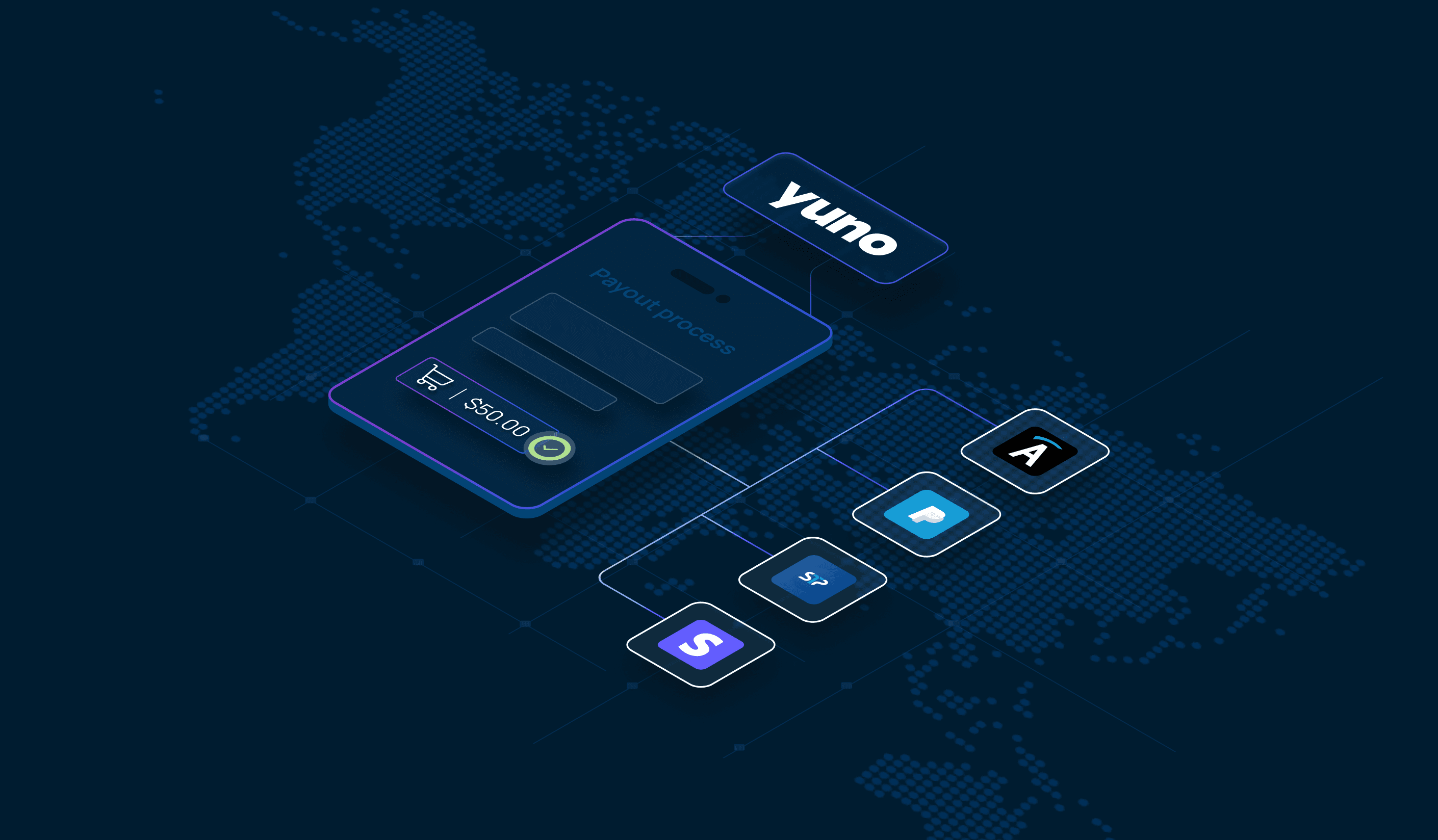
A payment orchestrator like Yuno simplifies global payment operations by offering a single API integration that manages both payins and payouts across multiple regions and providers. Through Yuno’s API, businesses can manage all aspects of payouts—designating beneficiaries, integrating different payment methods and depositing funds —without requiring separate integrations for each provider.
Yuno’s intuitive platform makes it easy to test and switch between providers to optimize performance without re-integration issues. Additionally, businesses can receive real-time updates on payouts and keep track of their transactions from one dashboard.
What separates Yuno from other payout providers is our global coverage. With integrations with over 300 payment providers — including local banks and alternative payment methods — we make it easy for businesses to support payments around the world.
Discover the power of Yuno's payment orchestration solutions: book a.demo.